Places · 渋草焼
Shibukusa
Hida’s porcelain — and the rain dragons on its bonsai pots
Shibukusa ware is porcelain from Takayama in the mountains of Hida, known for overglaze red painting. Its bonsai pots came much later.
Shibukusa ware began in the early 1840s in Takayama, in the mountains of Hida, and became known for porcelain painted in overglaze red. Bonsai pots came much later. A motif often seen on them is a hornless, thin-tailed dragon — the “rain dragon”.
00 · At a glance
Shibukusa, in four points
Kiln
Takayama, early 1840s
A semi-public kiln at the village of Shibukusa.
Name
Hida Kutani
Its red-painted porcelain led to that second name.
Bonsai pots
Around early Shōwa
Thought to be much later than the kiln; many recorded examples are red-painted with dragons.
Marks
Two recorded
渋艸園 and 渋草芳國; others may exist.
01 · はじまり

A kiln for Takayama
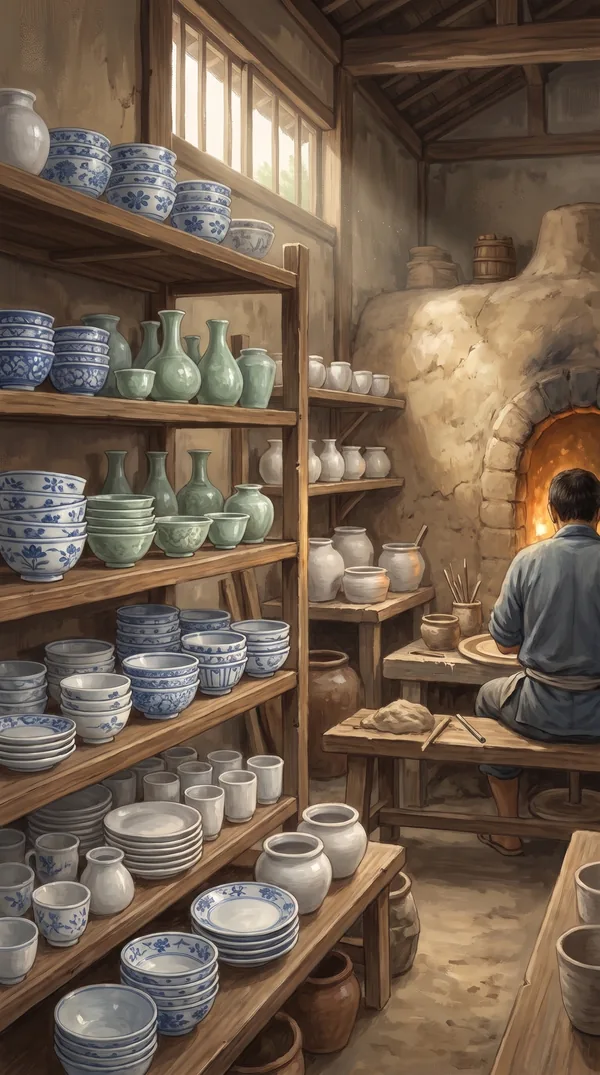
Pottery had been made in the Takayama area long before, but it had died out. In the early 1840s a semi-public kiln was established at Shibukusa village. Craftsmen from Owari and Kaga are among those recorded in its early history.
Its red-painted porcelain led to the name Hida Kutani.
02 · 再興
Closed, then revived
The first kiln later closed. In 1878 a local group formed Hōkokusha (芳國社) to revive the ware. It was incorporated in 1897 and changed its written name to 芳國舎 in 1903. Over the following decades it made blue-and-white, celadon, white porcelain and copper-red wares.
Takayama City currently identifies two workshops carrying the tradition: Hōkokusha Shibukusa Pottery and the Shibukusa Ryūzō kiln.
03 · 盆器
Bonsai pots: later than the kiln
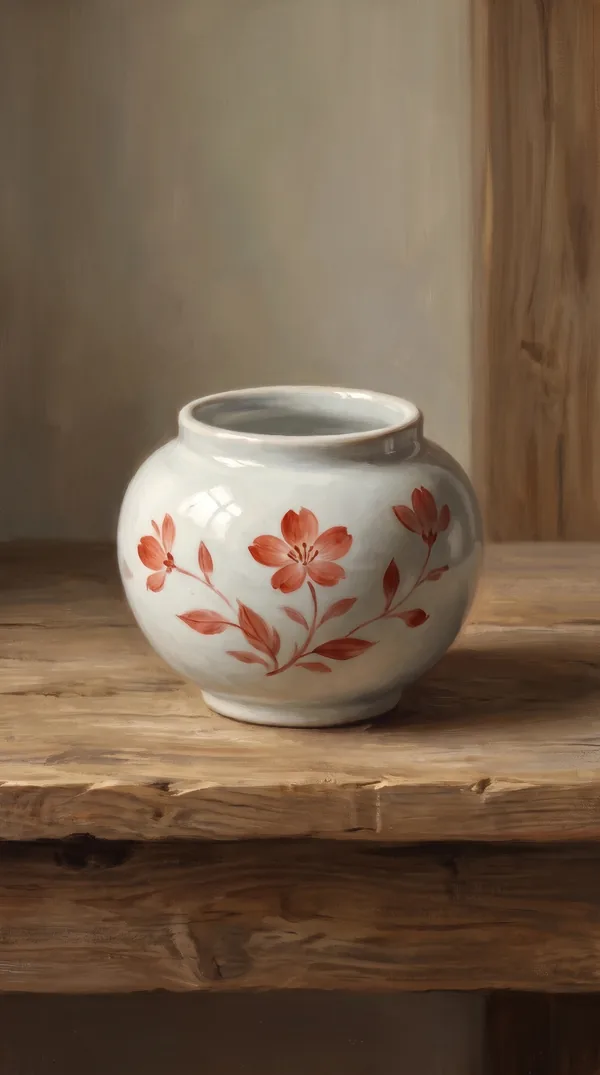
Shibukusa bonsai pots are thought to date from around the early Shōwa period, long after the kiln was founded.
Many recorded examples are painted in overglaze red with dragons. Red-painted flower designs and dragons in underglaze blue are also documented.
04 · 雨龍
The rain dragon
The rain dragon — read uryō or amaryō — is described as a representative Shibukusa motif. It is usually shown without horns, in a yellowish blue-green, with a thin tail.
Three pots recorded for this ware all carry it:
- a wide, shallow round with a rope rim, flaring like a jingasa hat, about 27 × 9 cm;
- a straight-sided round, about 15.5 × 10 cm, with bands of linked-circle pattern above and below a boldly simplified dragon, and drainage holes cut in the shape of a flame-arched window;
- a round with an outward rim, about 12.5 × 6.3 cm.
05 · 落款
Marks
Two marks are recorded for Shibukusa pots; others may exist.
If your pot carries a different mark, it may still be Shibukusa. Send us a photo and we will tell you what the mark says and whether it matches a form documented here.
06 · 見方
Reading a dragon pot
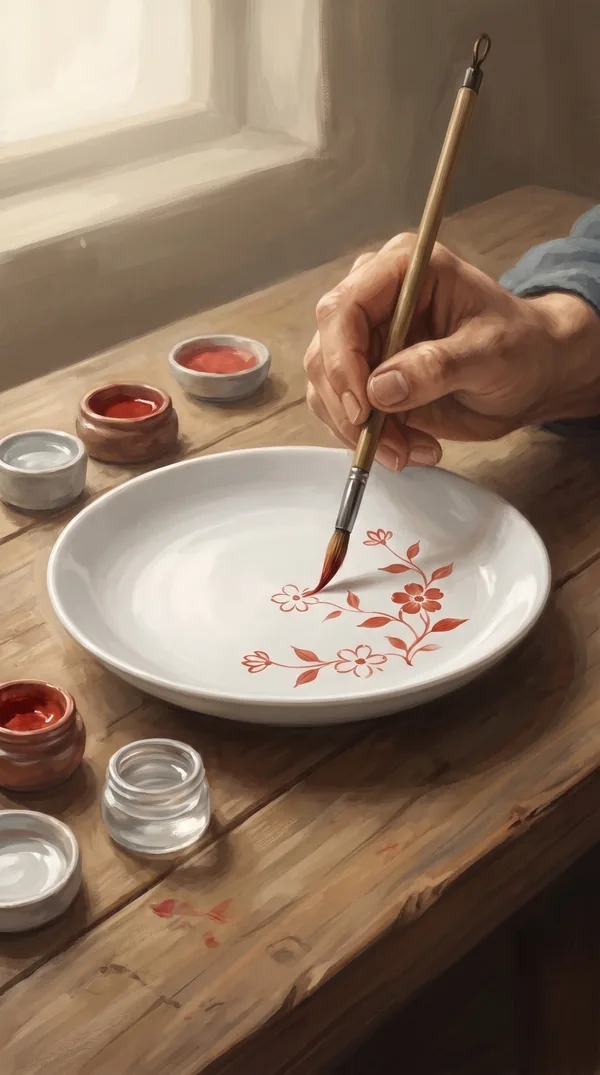
Dragons are painted on pots from many kilns. A dragon alone does not make a pot Shibukusa. Dragon form and a recorded mark may help with reading a pot, but neither establishes origin or authenticity by itself.
07 · YAKUMO と渋草焼
Shibukusa at YAKUMO JAPAN
We do not have a Shibukusa pot listed at the moment. Our pots are grouped on eBay by kiln and origin. The pictures on this page are illustrations, not pots for sale.
Browse bonsai pots by kiln and origin on eBay →
Listings ship from Tokyo; destination availability and terms are shown on eBay.
08 · Continue
Keep reading
Painted porcelain, marks and other kilns each have more to say on their own pages.