Journal · 手記 · How to look at a mark
Turn the light, not the pot: reading a mark with raking light
23 October 2026
When a shallow mark disappears under front light, change the direction of the light before you change your reading. Side light can settle an outline without settling what the characters say.
At a glance
- Use for
- Marks pressed or cut into the clay
- Not for
- Brushed marks, which sit on the surface
- What it shows
- Edges, outline, the layout of the characters
- What it does not do
- Read the characters for you
- This example
- Four character spaces, two by two; reading not confirmed
01 · 例 One example
Two characters, or four?
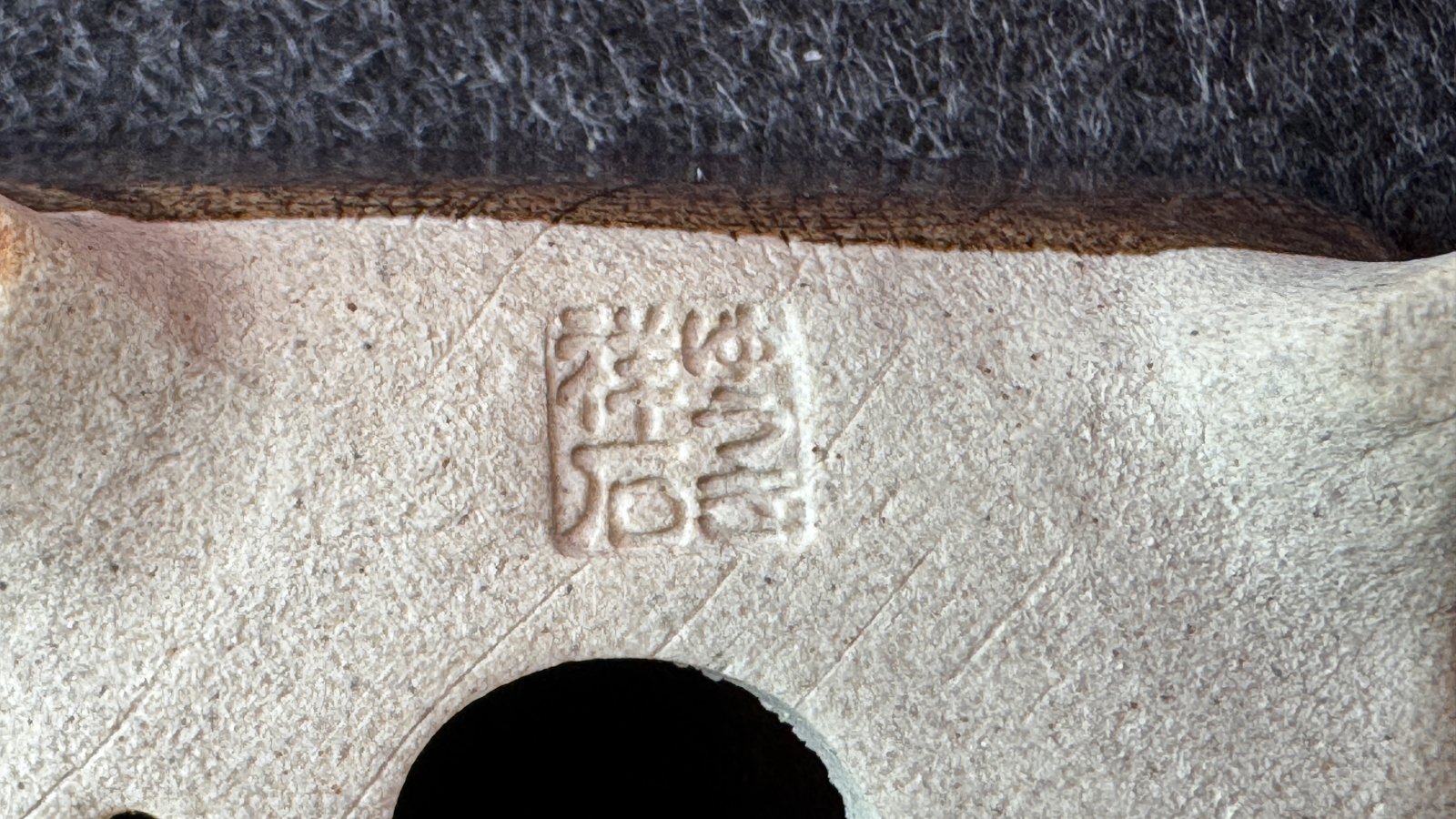
The photograph is of the foot of a small pot. In front light — the way a pot is usually lit for a listing — we had described this mark as two characters inside a frame.
Lit by a single lamp, low and to one side, the seal showed four character spaces — two columns of two — and we corrected our description.
What side light did not do is read the characters. The impression is shallow, and they remain unread. We would rather leave a mark unread than read it by guesswork.
02 · 方法 How to do it
One light, low and to the side
Remove loose dust with a soft brush. Do not wet, rub, chalk or fill a mark to make it photograph better.
Use one light source, low and almost level with the foot, so that it skims across the surface. Move the light around the mark and photograph it from each side. No flash.
Take one more photograph in soft front light from the same distance, so you have both the surface and the relief. Keep the camera parallel to the foot, and include a drainage hole or the foot ring for scale and position.
03 · 限界 What it cannot do
An edge, or nothing
Raking light only helps with marks pressed or cut into the clay: the light needs an edge to throw a shadow. A brushed mark sits on the surface and has none — for that, look at the brushwork in even light instead.
And a clearer outline is not a reading. Record the structure you can see, and keep the reading open until it can be confirmed.
Read further
- Index of marksDocumented marks by maker
- A mark you can’t placeJournal, 18 October: a brushed mark
Ask us
A pot, a mark, a question?
Send us a photograph and we will tell you what we can see — and what the photograph cannot tell us.