Places · 薩摩焼
Satsuma
White, black and gold, from kilns opened by Korean potters to bonsai pots
Satsuma ware has been made in the far south of Kyushu, from kilns opened by potters from Korea. It is not one kind of pot: there is white Satsuma and black Satsuma.
Satsuma ware has been made in the far south of Kyushu for more than four centuries, from kilns opened by potters from Korea. It is not one kind of pot: there is white Satsuma and black Satsuma, many kilns, and a gilded export ware that made the name known abroad. This page follows that history to the bonsai pots recorded from Satsuma — many of them painted, some of them made first for another purpose — and to what a Satsuma mark can and cannot tell you.
00 · At a glance
Satsuma, in four points
Beginnings
Potters from Korea
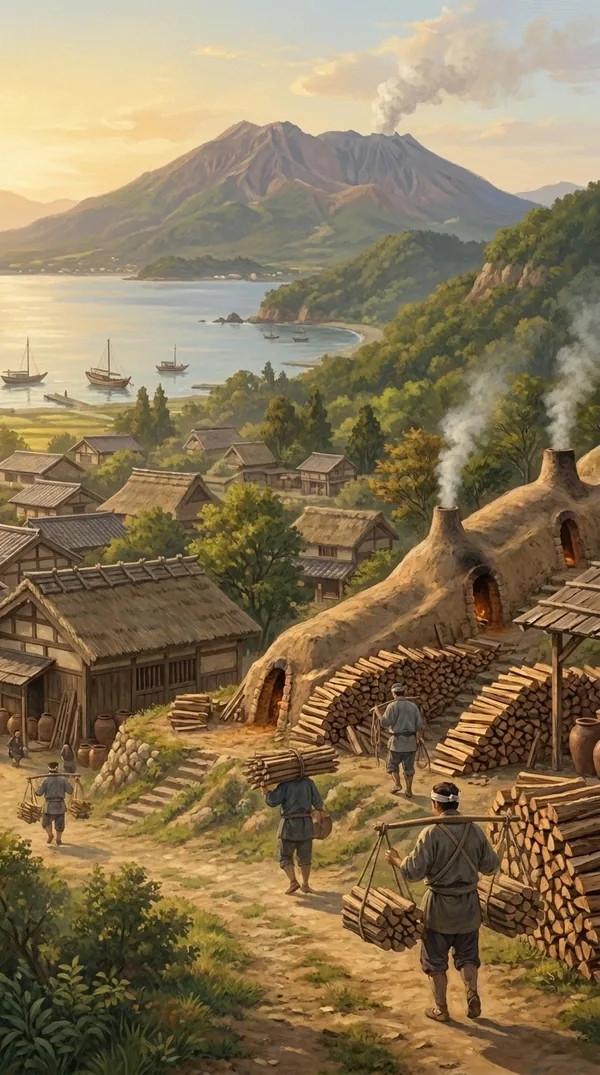
Satsuma ware began with kilns opened by potters from Korea, and has been made in Satsuma — today Kagoshima Prefecture — for more than four centuries.
Two bodies
White and black
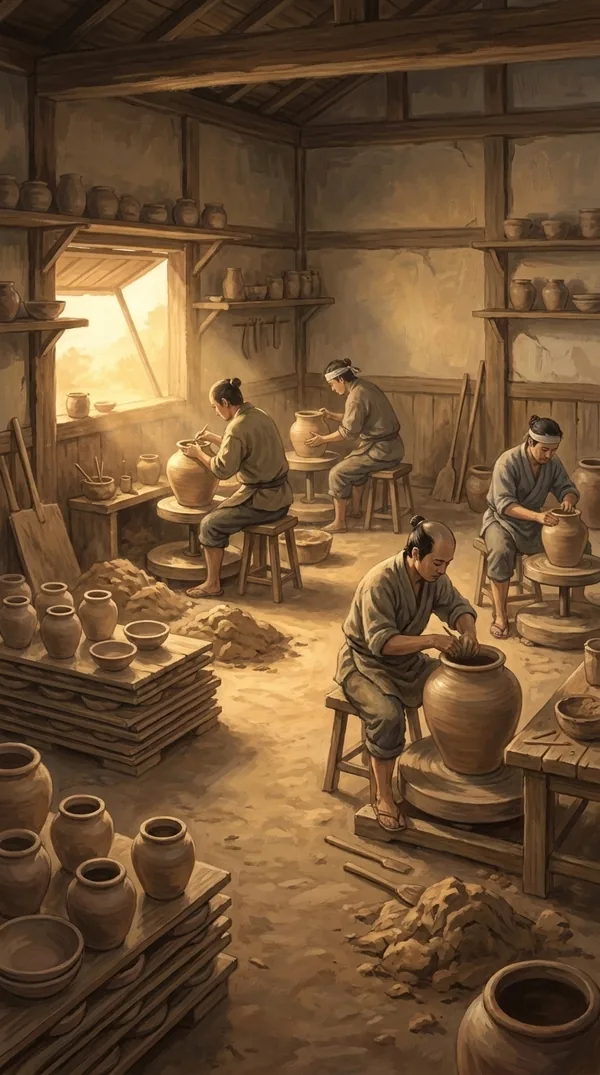
White Satsuma uses a white clay body; black Satsuma uses a coarser, less white one. They served different people and different needs.
Gold
Known abroad
Gilded ware in the kinrande manner was exported, and made the Satsuma name widely known overseas.
Bonsai pots
Mostly decorated
Most recorded Satsuma bonsai pots are painted or gilded pieces from the end of the Edo period onwards. Older ones, and black Satsuma ones above all, are rare.
01 · 薩摩焼のはじまり
Kilns opened by Korean potters
Satsuma ware begins with the Bunroku and Keichō campaigns — Japan’s invasions of Korea. Under the lord of the Satsuma domain, 島津義弘, potters from Joseon Korea, 金海, 朴平意 and 芳仲 among them, opened kilns in Satsuma.
-
The beginning
Kilns are opened
Potters from Korea open kilns in Satsuma. Kiln-building and potting both follow Korean methods.
-
After that
Many kilns
Satsuma follows much the same course as Karatsu ware: many kilns are built, and their products and styles are very varied.
-
More than four centuries
Still made
Satsuma ware has been made in the region for more than four centuries.
Folk kilns
民窯
Among them 苗代川, 龍門司, 磯 and 平佐.
Domain kilns
藩窯
Among them 帖佐, 竪野, 磯御庭 and 新御庭.
02 · 白薩摩と黒薩摩
White Satsuma and black Satsuma
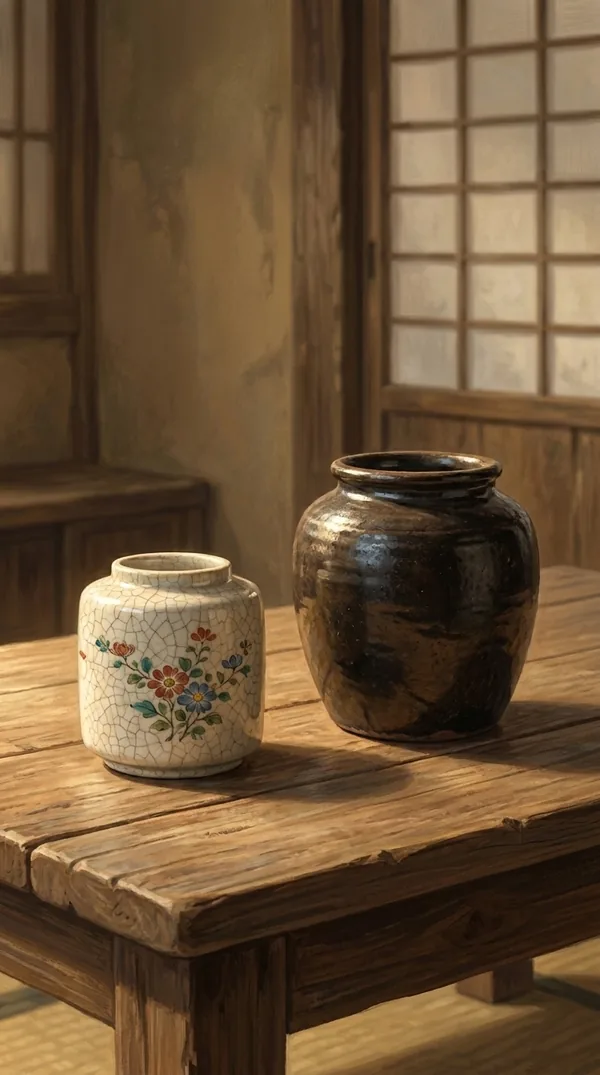
Satsuma ware is often divided in two, by its clay body. Neither half is the whole of Satsuma.
White Satsuma
白薩摩
Made with a white clay body. It includes enamelled nishiki-de 錦手 and gilded kinrande 金襴手, and a black-brown glaze called 御前黒. It was reserved for the lord of the domain. In Satsuma it was called shiro-mon — roughly, “the white ones”.
Black Satsuma
黒薩摩
A coarser ware whose body is less white, in black or coloured glazes. It was everyday ware for ordinary people — kuro-mon, “the black ones”.
Not to be confused: Kyō-Satsuma
Pots called Kyō-Satsuma 京薩摩 were made in Kyoto, in a Satsuma-like manner, partly for export. They are not Satsuma ware from Kagoshima. The Kyoto page shows some of them.
03 · 技法の広がり
Colour and gold, from elsewhere
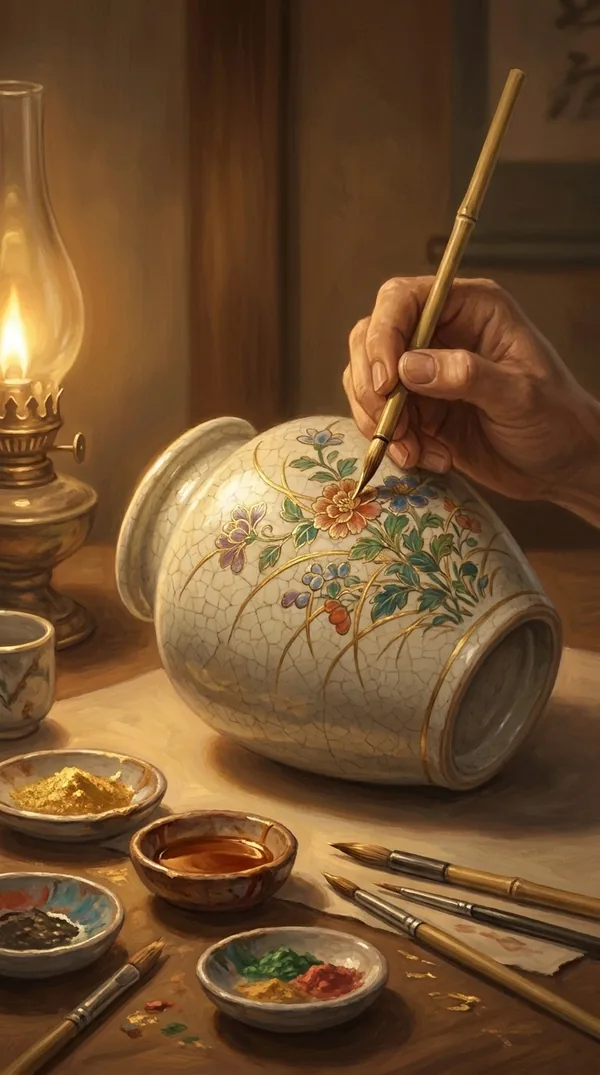
Satsuma began with Korean methods, and changed as its potters found new materials and took in techniques from other centres. The kilns rose and fell, but kept improving.
-
Materials
White clay and porcelain stone
With the discovery of white clay and porcelain stone, the ware was improved in many ways.
-
From Kyoto
Japanese-style enamel painting
A purely Japanese style of enamel painting is taken in from the 御室 kiln in Kyoto — the kiln of Ninsei.
-
From Hizen
Red enamel on porcelain
The method of red overglaze enamel on porcelain, nishiki-de, comes from Hizen.
-
From Kyoto again
Gold
The kinrande method of gilding comes from Kinkōzan 錦光山 in Kyoto.
With these, the Satsuma kilns produced many celebrated potters. Kyoto’s own story — Ninsei, and the Awata and Kiyomizu lines — is told on the Kyoto page.
04 · 輸出と近代
Gold for the world
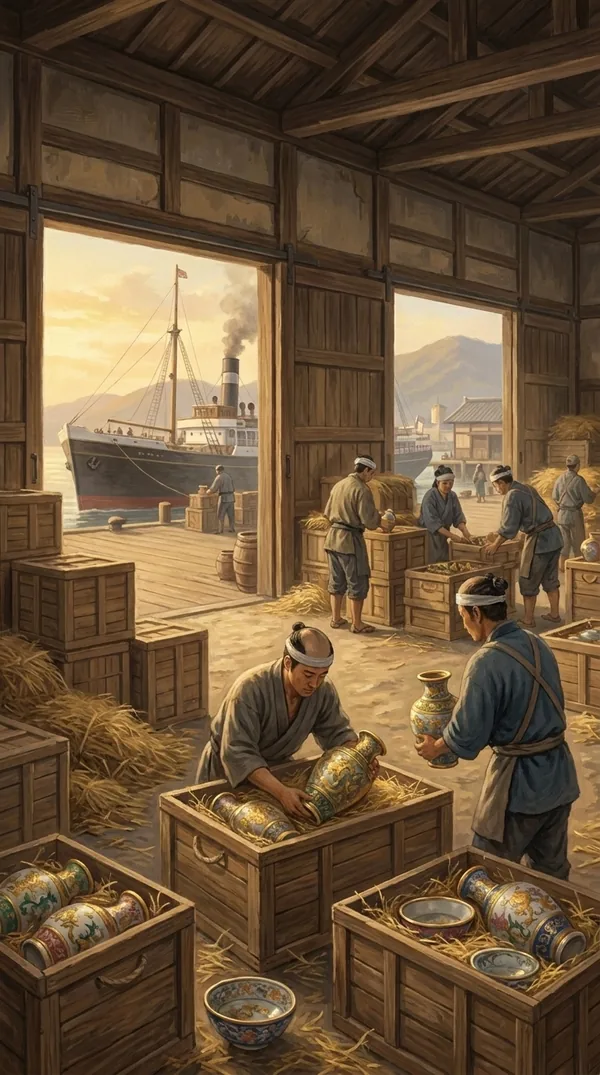
From the late Edo period into the Meiji era, large pottery works were set up with the domain’s support. They exported lavish, richly gilded kinrande ware, and the name of Satsuma kinrande became widely known abroad.
After the Restoration
Private works
After the Meiji Restoration these works passed into private hands, and laid the foundation of modern Satsuma ware.
One family
Chin Jukan
In 1857 a porcelain works was set up at the 苗代川 kiln for the first time, and the twelfth Chin Jukan was put in charge, making export goods such as coffee cups and Western tableware.
Vienna, 1873
A pair of vases
He showed a pair of large vases at the 1873 world exhibition in Vienna, won a name, and helped Satsuma’s exports.
Coming home
Returned pieces
Some recorded pots are described as having come back to Japan from abroad — one of them from Europe.
05 · 盆器
Satsuma bonsai pots
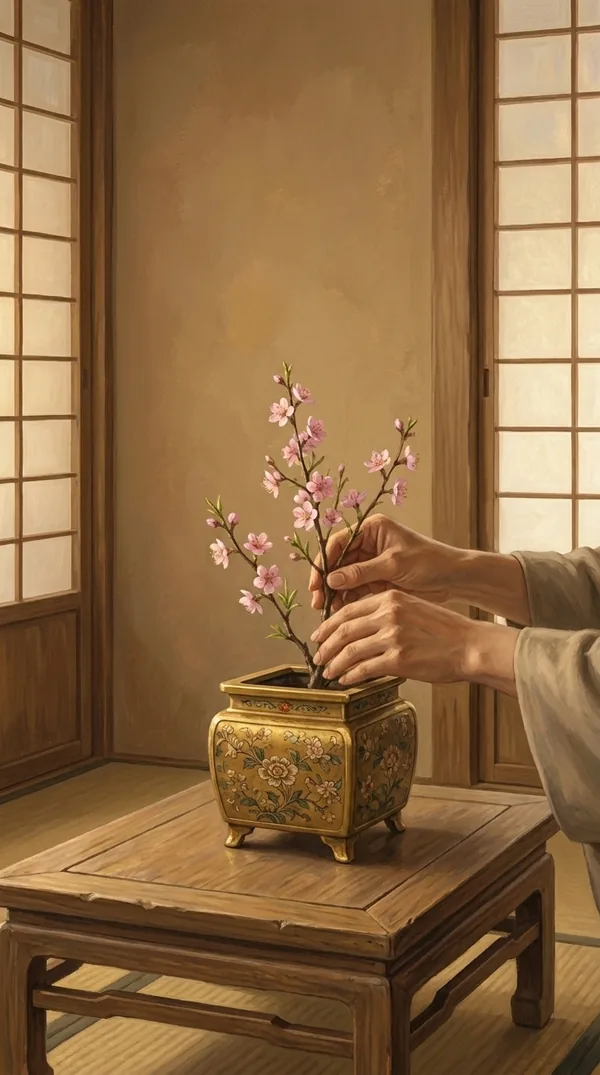
In the bonsai world, Satsuma bonsai pots made before the Meiji era, in the Edo period, are treated as Ko-Satsuma 古薩摩, “old Satsuma”. (In ceramics generally, the same word means the early wares of kilns such as 帖佐, 加治木, 苗代川 and 竪野 that keep a trace of Korean methods.) Old Satsuma bonsai pots are rare, black Satsuma ones above all. Most are enamelled or gilded pieces made from the end of the Edo period onwards.
Warriors
A Satsuma subject
Gilded Satsuma bonsai pots often show warriors — one possibly 島津 義久, sixteenth head of the house, in battle. The source links this to a martial tradition reaching into ceramic design, and describes it as a distinctive feature of Satsuma, not commonly seen in other pottery centres.
Repaired
Better for it
An old presentation pot painted with the Seven Lucky Gods was re-fired to repair its rim, and its once-bright gold turned dull. It lost its glitter — and, the record says, is arguably the better bonsai pot for it.
Another first use
Incense burners
A pair of small square pots came in a box inscribed as a presented incense burner, and were turned into bonsai pots by bonsai lovers. Two more are thought to have begun as incense burners — one of them judged so from its shape and size.
No drainage hole
A basin
A white Satsuma oval with morning glories has the form of a tree pot but no drainage hole — a rare piece, with a gentle subject also rare in Satsuma.
Small and plain, and rarer still
Tiny Satsuma pots are recorded too: a bag-shaped hexagon only 4.5 cm across, and a pair of almost plain white Satsuma pots of 4 cm. Near-plain white Satsuma pots are rare, and as tiny pots rarer still; they were probably made to a connoisseur’s order.
The dates of individual pots differ, and each comes with its own degree of certainty — “perhaps late Edo to Meiji”, “perhaps early Shōwa”. None of them dates Satsuma ware as a whole.
06 · 落款と見方
Reading a Satsuma mark
“Satsuma” on its own names a region and a tradition, not a maker. Some pots carry more.
A family name
薩摩壽官
The mark recorded for Chin Jukan. The name has passed down many generations, and the mark alone does not tell which one made a pot.
A short mark
薩广
Recorded on a small white Satsuma pot with chrysanthemums, perhaps made in the early Shōwa era.
A box, not a pot
An inscription
The pair of converted incense burners is known from the inscription on their box. A box can tell a story that the pot itself does not.
A note of choice
A collector’s order
A small white Satsuma square was ordered from a Satsuma kiln by Zeko 是好, the actor and small-bonsai figure. The source records the mark as 王陶山・是好撰; the mark does not by itself show that he painted it.
These are documented forms, not a complete list, and a mark is evidence to weigh, not proof. The marks index sets out the marks recorded so far on this site. If a mark puzzles you, send us a clear photograph and we will tell you what it says — we do not issue authentications.
07 · 作家と窯
Makers linked with Satsuma pots
These are the makers the record links with Satsuma bonsai pots.
Chin Jukan 沈寿官
A hereditary family of potters representative of Satsuma ware, counted from 沈当吉, a potter from Korea who settled in Japan; the record counts the head at the time of writing as the fifteenth. The best known is the twelfth (1834–1906), who later opened his own kiln, the 玉光山 works, and trained successors. The family is known for white Satsuma, white glaze with fine openwork, and enamel with gold. Its recorded bonsai pots are all white Satsuma. Twelve sets of four small pots by the twelfth are said to be kept in the Imperial Palace, made at the request of 昭憲太后, who loved wild flowering plants; one recorded set is thought to be a spare from that order.
Zeko 是好
The actor and small-bonsai figure ordered at least one small pot from a Satsuma kiln; when is not known. Its shape — single rim, straight sides, cut feet — is said to reflect his taste for pots meant to be used. His own page tells more.
08 · YAKUMO と薩摩
Satsuma at YAKUMO JAPAN
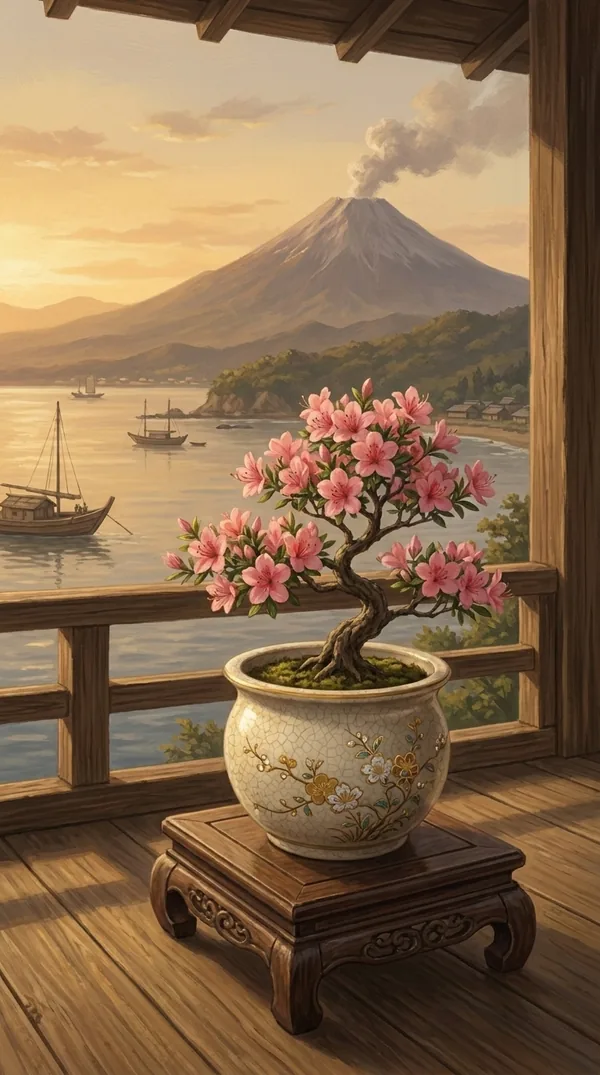
We do not have Satsuma pots listed at the moment, and our eBay store has no Satsuma section. Our pots are grouped there by kiln and origin; the link below opens that section, so it always shows what is available now. The pictures on this page are illustrations, not pots for sale.
Browse bonsai pots by kiln and origin on eBay →
Listings ship from Tokyo; destination availability and terms are shown on eBay.
09 · Continue
Keep reading
The marks, glazes and forms on this page each have more to say on their own pages.