Places · 赤膚焼
Akahada
A pottery named after its hill, and the Meiji-era record of its glazed bonsai pots
Akahada ware is pottery from the edge of Nara, named after the hill whose clay it used. In the Meiji era, when imported Chinese pots led the bonsai market, it was one of the Japanese attempts at glazed bonsai pots.
Akahada ware is pottery from the edge of Nara, named after the hill whose clay it used. It was known first for tea wares. In the Meiji era, when imported Chinese pots led the bonsai market, Akahada appears in the source as one of the Japanese attempts at glazed, hard-fired bonsai pots — and its marks were copied by other kilns. This page follows that story, and what an Akahada mark can and cannot tell you.
00 · At a glance

Akahada, in four points
Place
Nara
Pottery from Gojō village in Yamato, now Nishinokyō in the city of Nara, named after Akahada-yama, the old name of the hill whose clay it used.
Body
Pottery body
The source describes the Akahada ware discussed here as pottery-bodied, not porcelain.
Bonsai pots
A Meiji-era attempt
In the Meiji era, when imported Chinese pots led the bonsai market, the source names Akahada among Japanese attempts at glazed, hard-fired bonsai pots.
Marks
Read with care
Several Akahada marks are recorded, and the source notes that other kilns copied them.
01 · 赤膚焼のはじまり
A hill of red clay
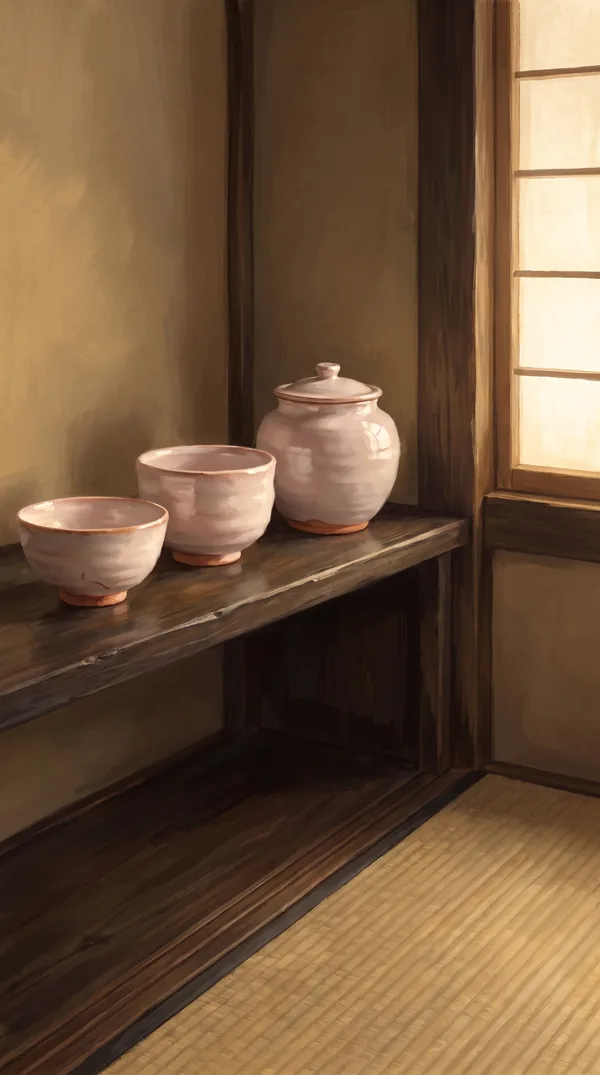
Akahada ware was made at Gojō village in the old province of Yamato, today Nishinokyō in the city of Nara. The clay came from Gojō-yama, a hill once called Akahada-yama — and the ware took the hill’s old name.
-
Tradition
Potters from Tokoname
Tradition attributes the founding to Toyotomi Hidenaga, lord of Kōriyama Castle, who is said to have brought potters from Tokoname.
-
Tea wares
Kobori Enshū
The kiln stopped and started more than once. It is said to have become known for tea wares in the taste of Kobori Enshū, traditionally associated with his guidance.
-
Also said
Ninsei, and potters from Seto
Ninsei is also said to have guided the kiln. Later, Yanagisawa Yasumitsu — known as Gyōzan (堯山; written 尭山 in the source) — is said in the source to have invited potters from Seto to make Hagi-style sake wares.
-
1799–1870
奥田木白
In the late Edo period 奥田木白 made refined, elegant work; the source describes him as a celebrated master of Akahada ware.
The founding story is recorded as tradition. We give it as that, not as documented fact.
02 · 土と釉
Clay and glaze
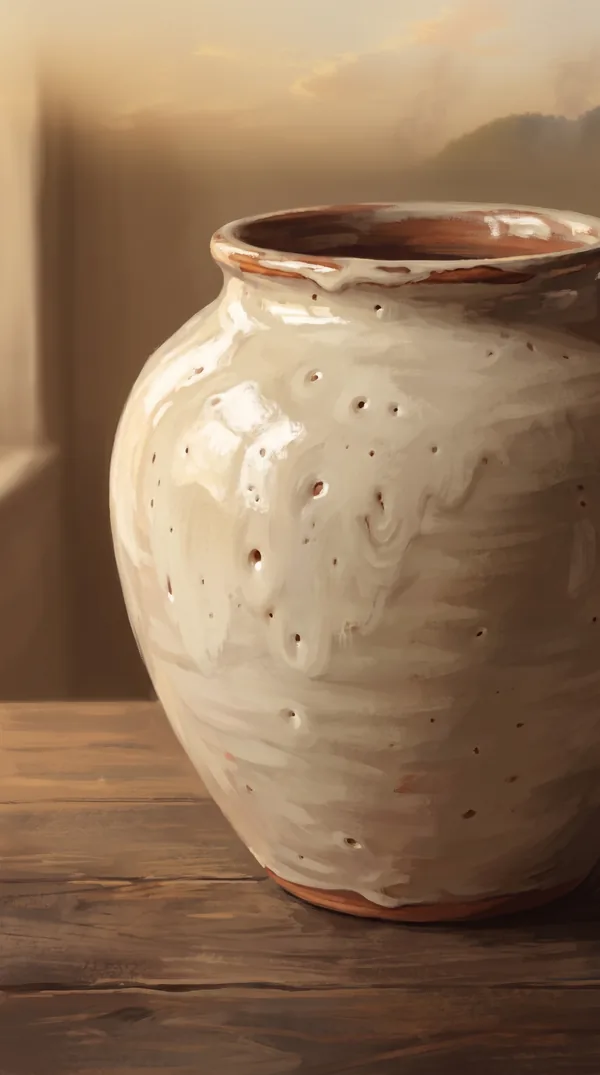
The source describes the Akahada ware discussed here as pottery-bodied. Its best-known glaze is a Hagi glaze: an opaque white that sometimes takes on a faint red tint. The source describes it as refined and deep, and valued by people of tea.
Hagi glaze
A dull white
A glaze of straw ash, wood ash (dobai) and feldspar that fires to a dull, soft white. The source explains that it began as a Korean glaze and took its name from its constant use at Hagi; depending on the mix and the firing it often shows a faint red.
White Kōchi
Milky and opaque
Many recorded Akahada bonsai pots have the milky, opaque white glaze that the source calls “white Kōchi.”
Other glazes
Blue Kōchi, namako
The source also lists Hagi glaze, blue Kōchi and namako glaze on Akahada bonsai pots.
A copied glaze
Jun
One recorded pot imitates the glaze of Chinese Jun ware, applied by a sprayed technique.
For the glazes named here, see Clay & glaze.
03 · 明治の盆器
Japanese glazed bonsai pots, in the age of Chinese pots
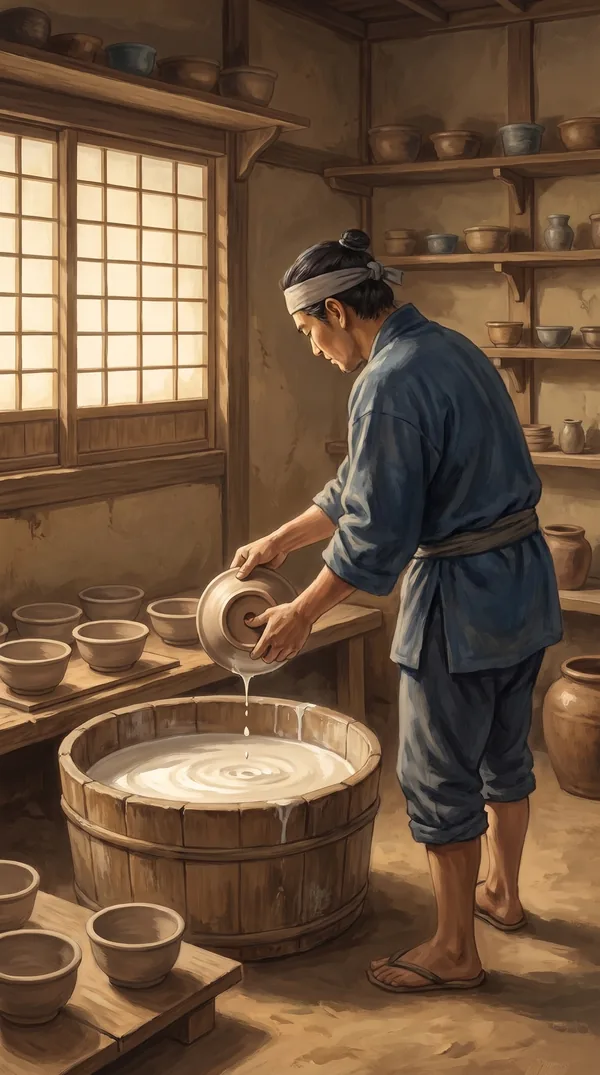
In the Meiji era the bonsai market was dominated by imported Chinese pots. The source names 三銀 and Akahada among Japanese attempts at glazed, hard-fired bonsai pots during the Meiji period.
At the kiln
石川寅吉
The Akahada kiln owner 石川寅吉 and others made fine pots, mainly copies of Kōchi ware.
Hard to tell apart
Without the kiln mark
It is said that, without the kiln mark, they could hardly be told from Chinese pots.
Survivors
Few
The source notes that surviving examples were few and regarded as valuable.
That is the record of one group of kilns and one period. It is not a claim about every Akahada pot, or about Japanese bonsai pots in general.
04 · 盆器
Recorded Akahada pots
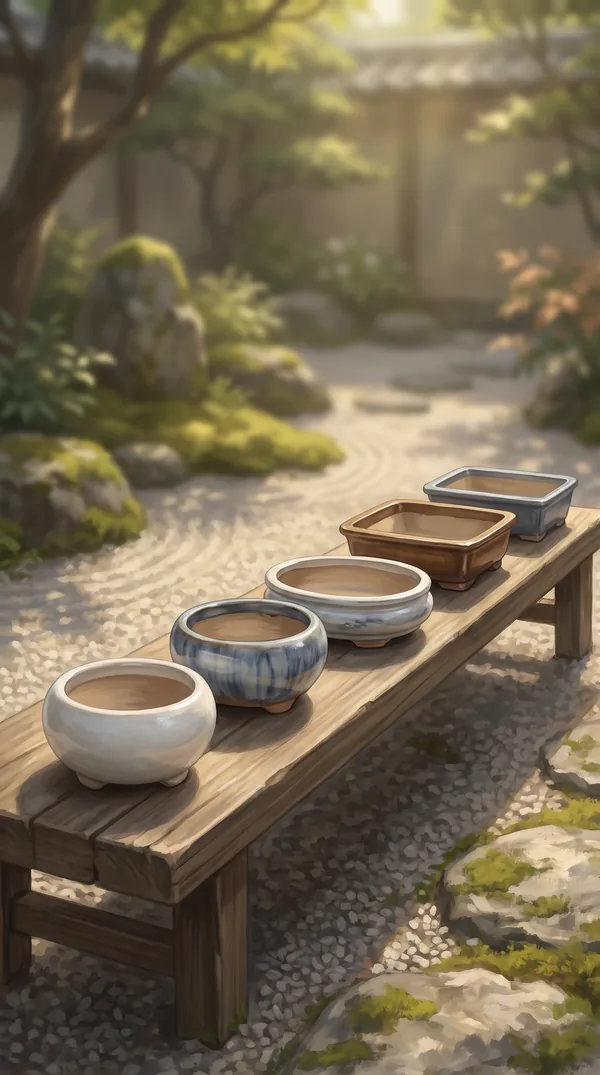
The record shows Akahada bonsai pots from small to medium size, most in white glazes. A few examples, with the source’s own comments:
Namako
A round pot with a cord rim
18.2 cm, marked 赤ハダ. Namako glaze is poured over an amber-tinted clear glaze, after Cantonese namako ware; the source suggests it was probably made around the mid-1930s, when the bonsai world was lively, and judges it equal to its models.
Openwork
A white rectangle
21.3 cm, white glaze, with its sides cut through in a pattern of interlocking circles.
Small
A white square
18.3 cm across. The source ranks it among the very best of small bonsai pots.
Jun
A rectangle after Chinese Jun ware
14 cm, imitating the glaze of Chinese Jun ware by a sprayed technique. The source describes its workmanship as the finest among the Akahada examples presented there.
Hagi glaze
A shallow rectangle
18.5 cm, in Hagi glaze. The same glaze appears on a pot planted with a small fruiting shrub in the record.
Water tray
Relief waves
27.3 cm, brown outside and white inside, with waves in relief; marked 赤膚山.
The record gives an estimated date for only a few of these pots, and only as an estimate. None of them dates or describes Akahada ware as a whole.
05 · 落款と見方
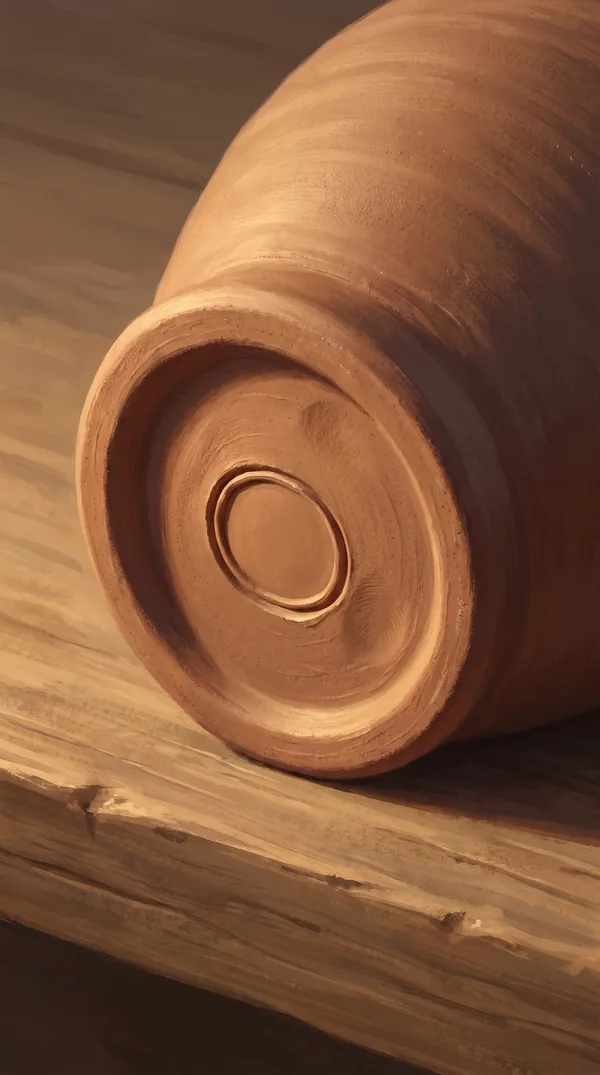
Reading an Akahada mark
The source records these Akahada marks, among others:
Two-character
赤膚
Akahada.
Gourd
赤ハダ
Akahada, written 赤 and ハダ, inside a gourd-shaped outline.
With the hill
赤膚山
Akahada-yama.
Others
赤膚貴白・赤膚山木白・赤膚山楽斎
Further marks recorded under the Akahada name.
For the marks recorded so far on this site, see the marks index. If a mark puzzles you, send us a clear photograph and we will tell you what it says.
06 · YAKUMO と赤膚
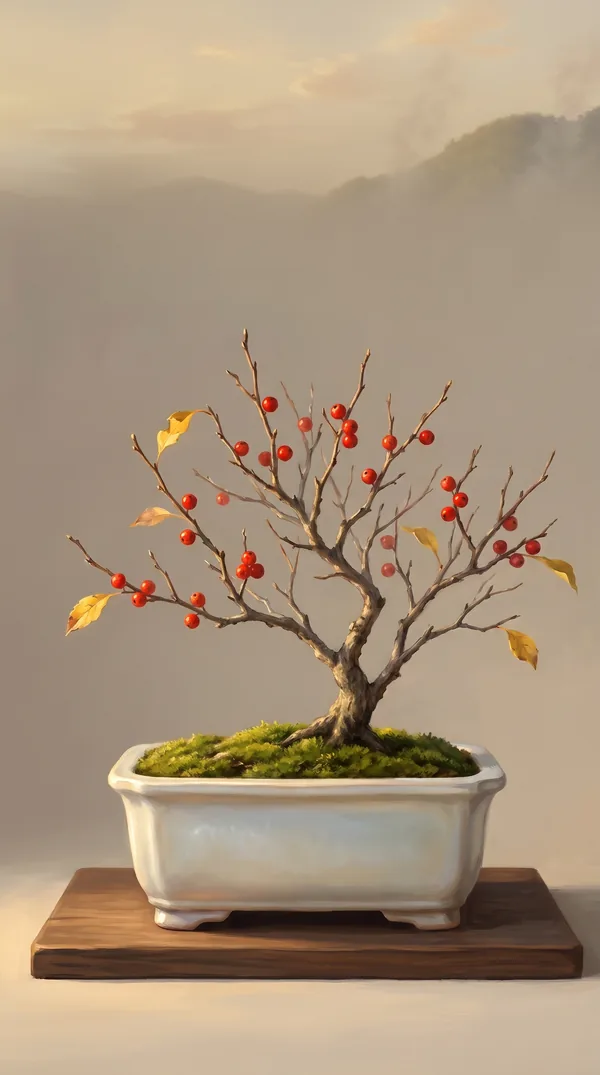
Akahada at YAKUMO JAPAN
Current availability changes. Our pots are grouped on eBay by kiln and origin; the link below opens that section, so it always shows what is available now. The pictures on this page are illustrations, not pots for sale.
Browse bonsai pots by kiln and origin on eBay →
Listings ship from Tokyo; destination availability and terms are shown on eBay.
07 · Continue
Keep reading
The places, glazes and marks on this page each have more to say on their own pages.