Places · 常滑
Tokoname
From storage jars to the bonsai pot
Tokoname ware comes from the medieval kilns of the Chita Peninsula and is known for unglazed clay. It moved from storage jars to the bonsai pot.
For centuries Tokoname fired unglazed clay into jars, mortars and everyday ware, and later into tea wares. Its bonsai pots came late — from the Meiji 10s, roughly 1877 to 1886 — and their roots are traced to a craftsman invited from China in 1878 to teach the making of Chinese-style teapots. This page follows that line from the medieval kilns to the pots, and to the kilns and makers whose marks you will find on them.
00 · At a glance
Tokoname, in four points
Place
The Chita Peninsula
Tokoname is counted among Japan’s Six Old Kilns. Its old kiln sites are scattered widely, centred on the Chita Peninsula in Aichi.
At its height
More than 3,000 kilns
From the late Heian period through the Kamakura and Muromachi periods, the kilns of Tokoname numbered more than three thousand.
Bonsai pots
From the Meiji 10s
Bonsai pots began to be made in Tokoname from the Meiji 10s, roughly 1877 to 1886. The medieval ware was everyday ware, not bonsai pots.
The clay
Unglazed at heart
Tokoname built its name on unglazed clay. Glazed bonsai pots are made there too, by kilns and makers who set out to do so.
01 · 古常滑
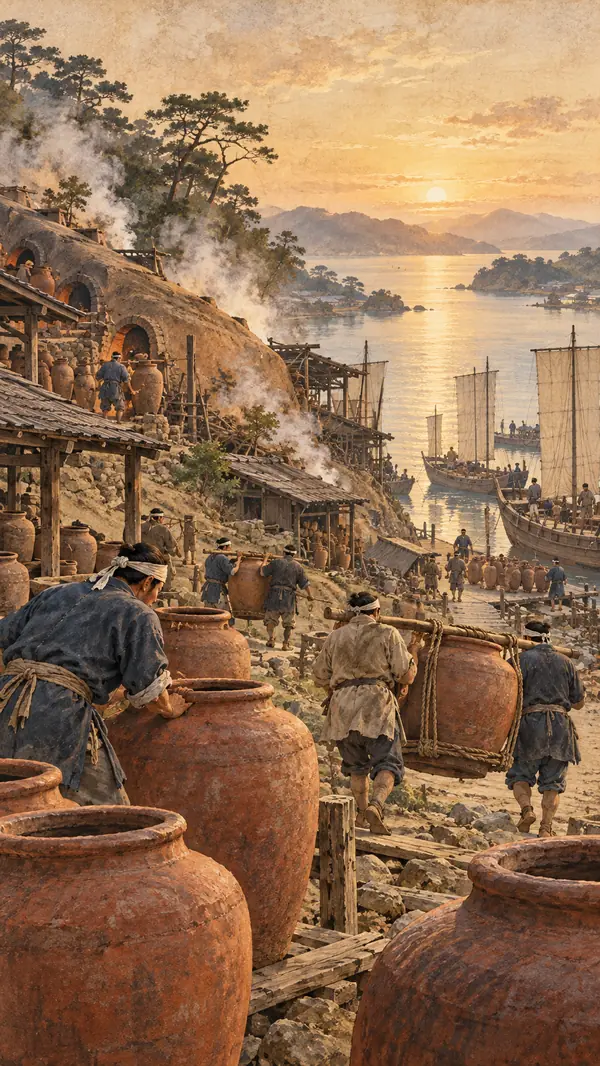
Origins: one of the Six Old Kilns
Old Tokoname — Ko-Tokoname 古常滑 — is the ware of the medieval kilns. It was made for daily life, in quantity, and it travelled far.
-
Heian period
Ware by sea
Making use of sea routes, Tokoname sent its ware across Japan: jars and large storage jars, mortars, and the bowls called yamajawan — everyday ware supplied to ordinary households.
-
Late Heian to Muromachi
More than 3,000 kilns
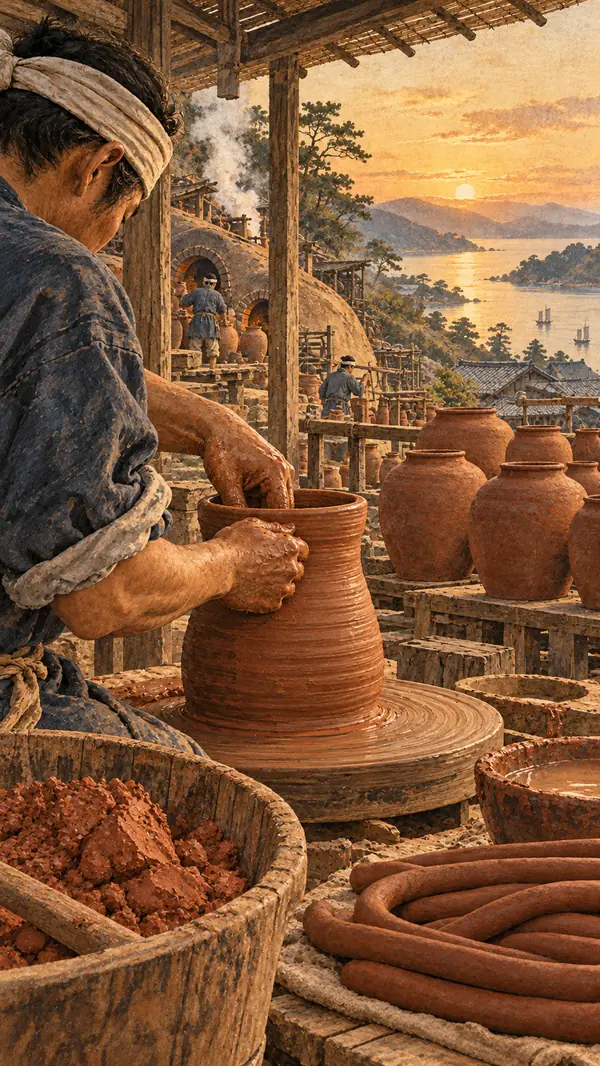
At its height the kilns numbered more than three thousand. All of the ware was unglazed, coarse stoneware, made cheaply and in quantity by coiling combined with the wheel.
-
From the mid-Muromachi period
Decline
From the middle of the Muromachi period the kilns declined.
None of this was made for growing trees. When people speak of old Tokoname they mean this medieval ware; Tokoname bonsai pots belong to a much later chapter.
02 · 土と焼成
Clay and fire
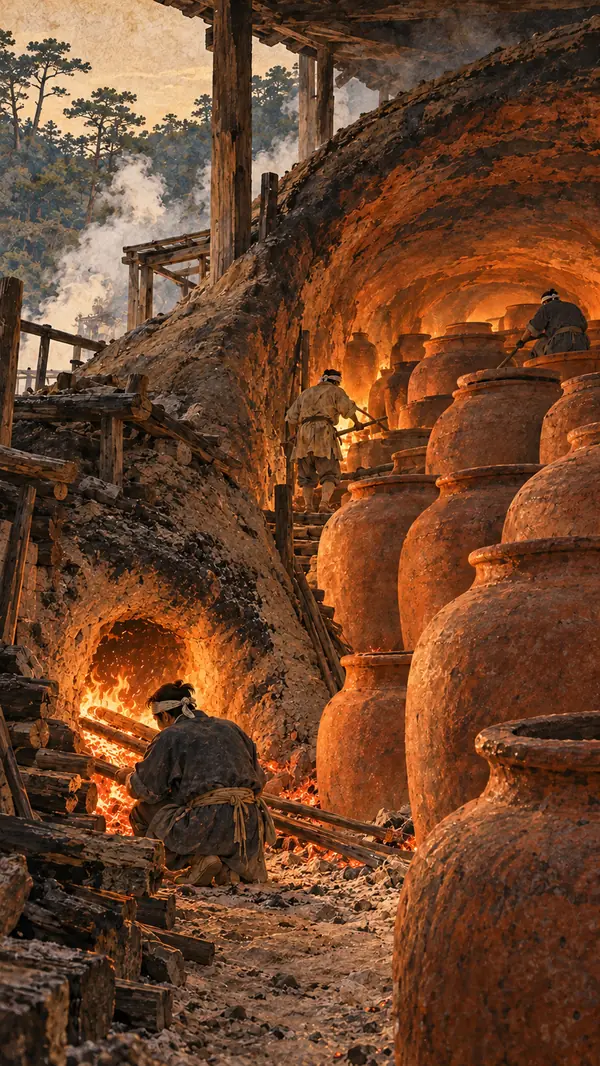
Unglazed clay runs through Tokoname from the medieval jars to the bonsai pot. A pot made without glaze — deimono 泥物 — shows the clay itself, so the clay and the firing carry the whole look of the pot. The points below are drawn from documented makers and kilns; they describe what has been recorded, not every Tokoname pot.
Clay
High in iron
Tokoname clay is high in iron. Around 1976 Gyōzan Nakano completed a clay of his own, 曙 akebono, by blending a low-iron clay into it.
Colours
Named clays
Tokoname pots are described with the clay-colour names also used for Chinese pots: shudei vermilion, shidei purple, udei crow-black, and others.
Bodies
Clays worked up
Yamaaki’s first-generation body mixed Tokoname clay with chamotte and sawdust and fired it to an open, porous state; the second generation’s 常滑烏泥 blends Chinese zisha with Tokoname clay.
Fire
Gas kilns
In 2006 Yamaaki fired in one of the largest gas kilns in Tokoname, a bell kiln. Gyōzan moved from an electric kiln to gas in 1984, when the clay being dug in Tokoname had changed.
Kiln effects
Not always even
In 2006 Gyōzan was using a small kiln with a steep temperature gradient, to court an effect that would not repeat. On a recorded Ikkō pot and in Eimei’s work, a single glaze fired two colours, and the gas kiln is given as the reason.
Finish
Ibushi
A finish called ibushi イブシ damps down the shine of vermilion clay, which is why a new Bigei pot can already look settled.

03 · 壺・甕から急須へ
From jars to tea wares
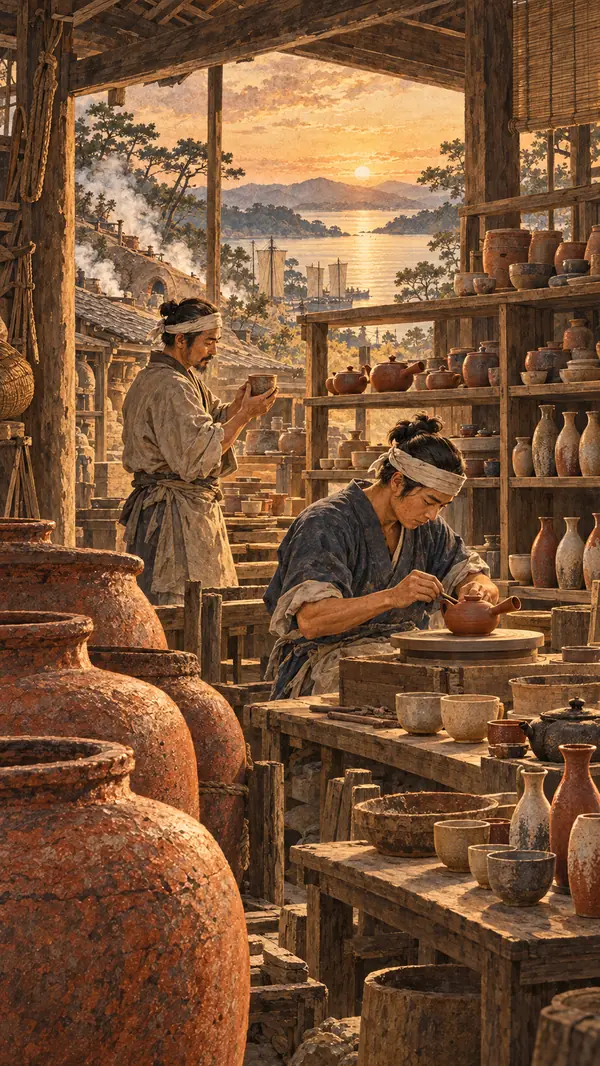
After the medieval decline, Tokoname’s potters turned from storage and kitchen ware towards the tea table — and it was the teapot that led, in the end, to the bonsai pot.
-
1764–1788
Tea and sake wares
In the middle of the Edo period, Tokoname began making tea wares and sake wares.
-
1789–1829
Sencha wares
With the fashion for sencha, Tokoname made wares for it, and noted potters came out of the town, among them 伊奈長三, 鯉江方寿 and 杉江寿門.
-
Late Edo to Meiji
Glaze and kōchi
Glazed ware in the Takatori manner was made, and so were copies of kōchi ware, by 伊藤董斎 among others. They are said to have been very popular.
-
1878
The Chinese teapot
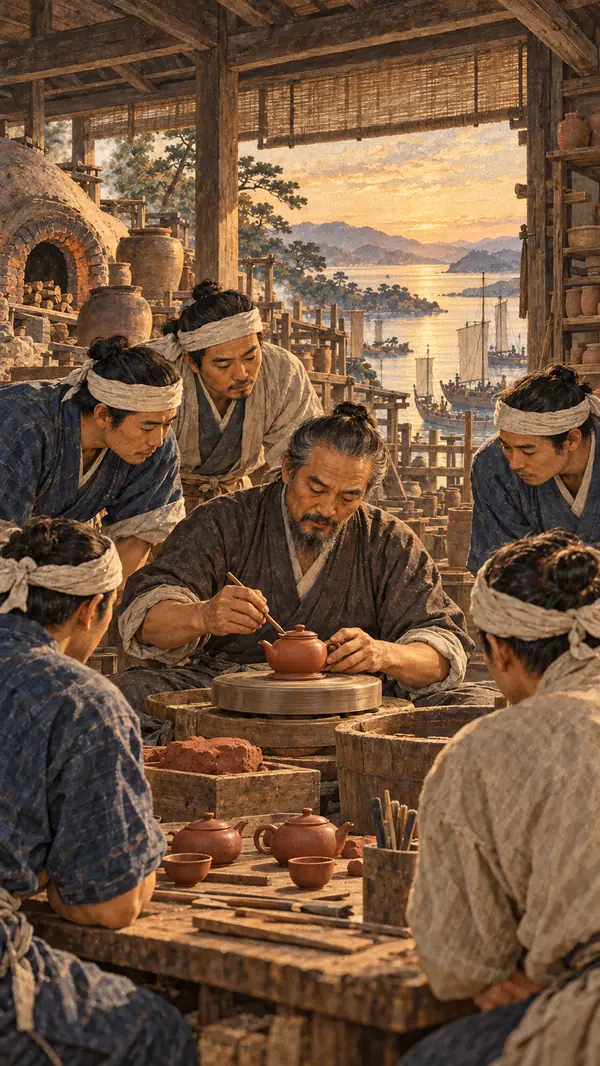
Tokoname invited 金士恒 from China and learned from him how to make Chinese-style sencha teapots.
04 · 盆器のはじまり
From ware to the bonsai pot
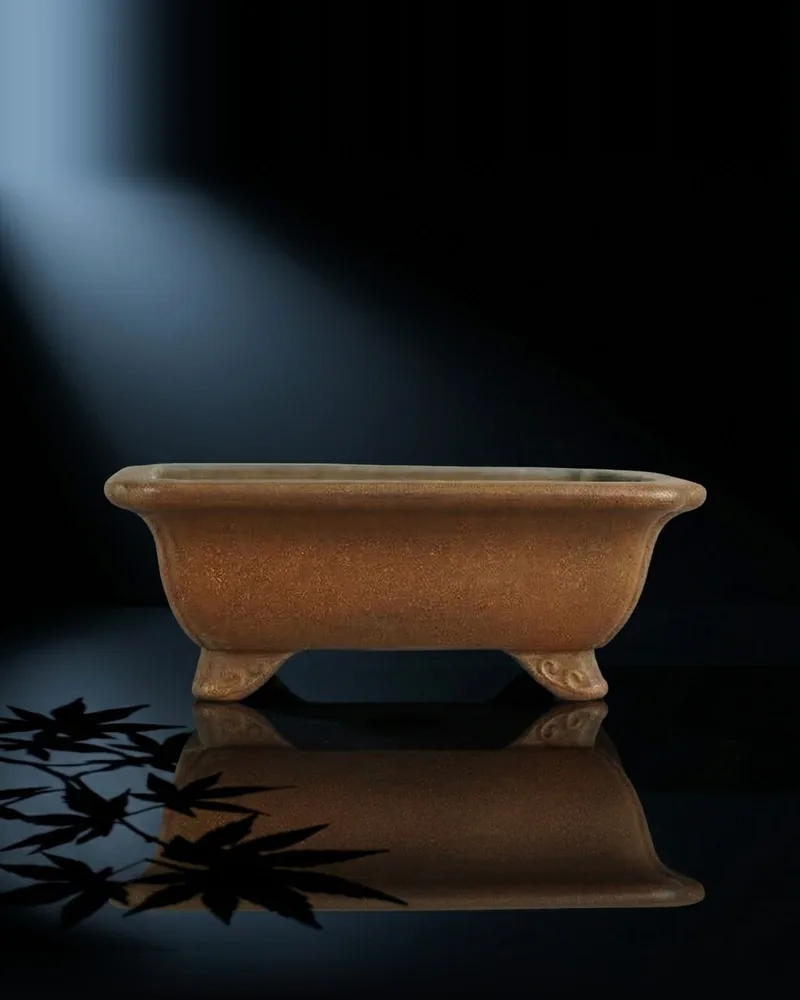
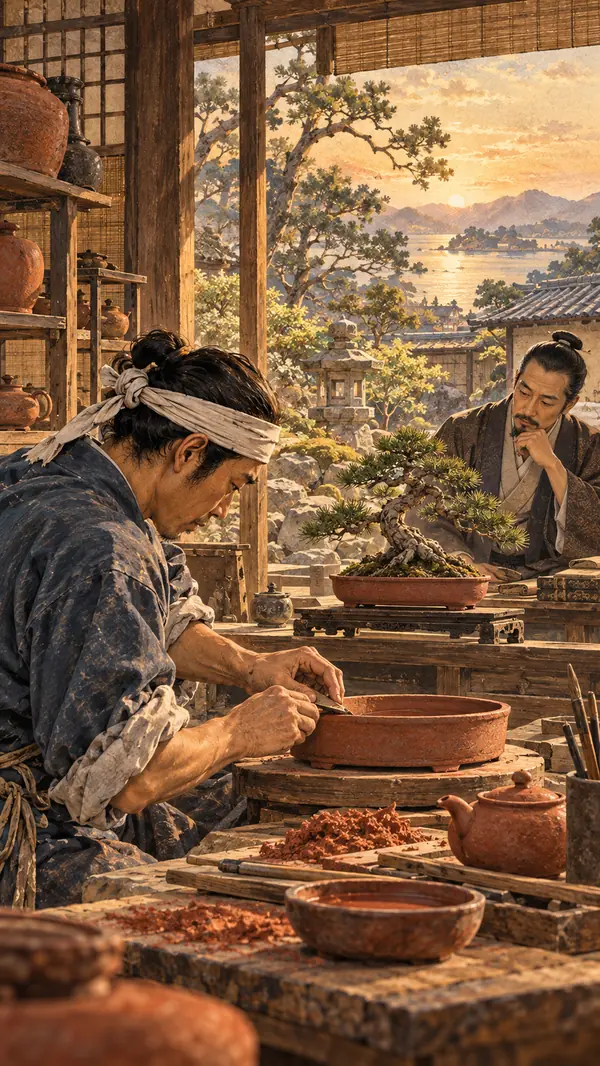
Bonsai pots were made in Tokoname from the Meiji 10s. The story told for their beginning goes back to 1878. When 金士恒 came from China to teach the Chinese-style teapot, he also made shudei pots as objects for the literati taste of the time. These are said to be the roots of today’s Tokoname bonsai pots, and the few shudei pots that carry his name are especially prized.
The Chinese pot stayed a model long after that. The records of the makers on this site show it again and again:
Bodies
The old Chinese clays
Gyōzan Nakano set out to recreate the bodies of old Chinese pots — udei, tōkadei, kakidei, shidei and shudei.
Glazes
The colours of the imports
Reihō went after the glazes of the old and middle-period Chinese imports — white and yellow kōchi, kin’yō — in a town known for unglazed clay.
Marks
A Chinese mark, copied
Before the war, when Tokoname kilns were making copies of Chinese ware, the Zengo kiln copied a Chinese mark along with the rest. The mark stayed, and it is a Tokoname kiln’s mark.
Small pots
Shaded shudei
Bigei became known for the small pot in softly shaded shudei — the same vermilion clay as those early literati pots — and it was highly regarded among shōhin growers.
05 · 常滑盆器のかたち
What Tokoname pots are like
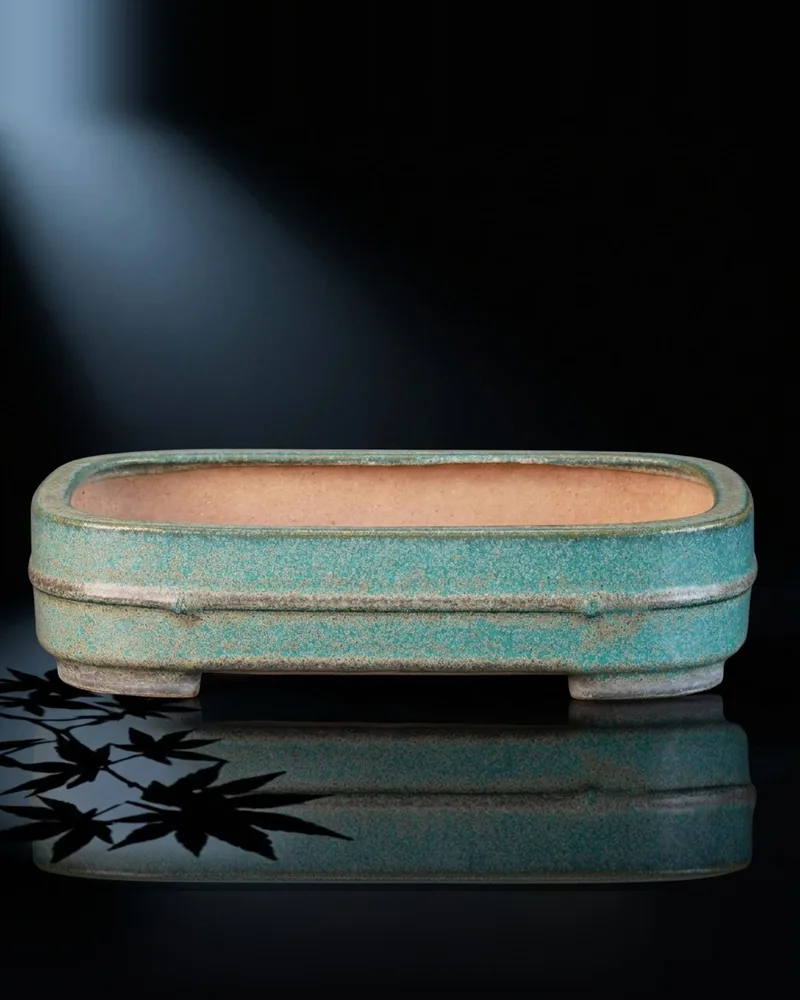
There is no single Tokoname pot. What the records do show is a set of habits: how the pots are formed, which clays and glazes are used, and what makers say a pot is for.
Forming: hand and mould
Press-moulding, slab-building タタラ, coiling and the wheel are all recorded. In Tokoname, press-moulding is usually counted as handwork, so “handmade” alone does not tell you how a pot was formed. Shibakatsu moved from press-moulded production ware to slab-building and press-moulding by hand; Yamafusa records over fifty standard shapes, and hundreds counting glazes and sizes; Hattori makes almost all of his glazed small pots with moulds.
Unglazed and glazed
Unglazed clay is the centre of the town’s work — Zengo was recorded in 2006 working almost entirely unglazed. Glazed pots have their own makers: Reihō and Ikkō work mainly in glaze, and all five pots currently recorded here for Yamafusa are glazed.
For the tree
We do not make general claims about how Tokoname clay grows a tree. What is recorded is particular:
Inside the pot
A rough inner wall
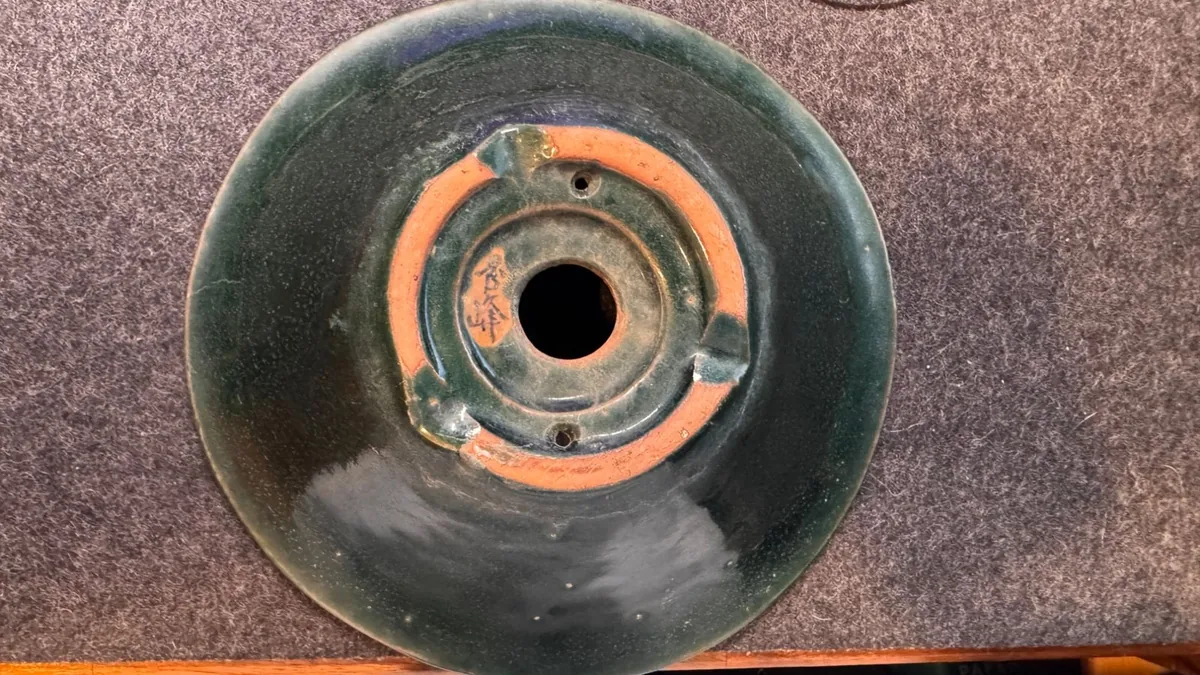
On one recorded Shibakatsu pot the inner wall was roughened. It is done for the tree rather than the eye: a rough wall helps fine roots develop and helps the clay take up water.
Purpose
Good to grow in
Hattori is described as setting out to make pots that are good to grow in, easy to use, and that set a tree off.
Depth
Room for roots
One recorded Reihō pot is described as right for fruiting or flowering trees that need some depth of soil.
Restraint
The tree first
The account of Bigei’s carved and pierced work reminds the reader that a pot’s real job is to set off the tree.
06 · 作家と窯
Makers and kilns
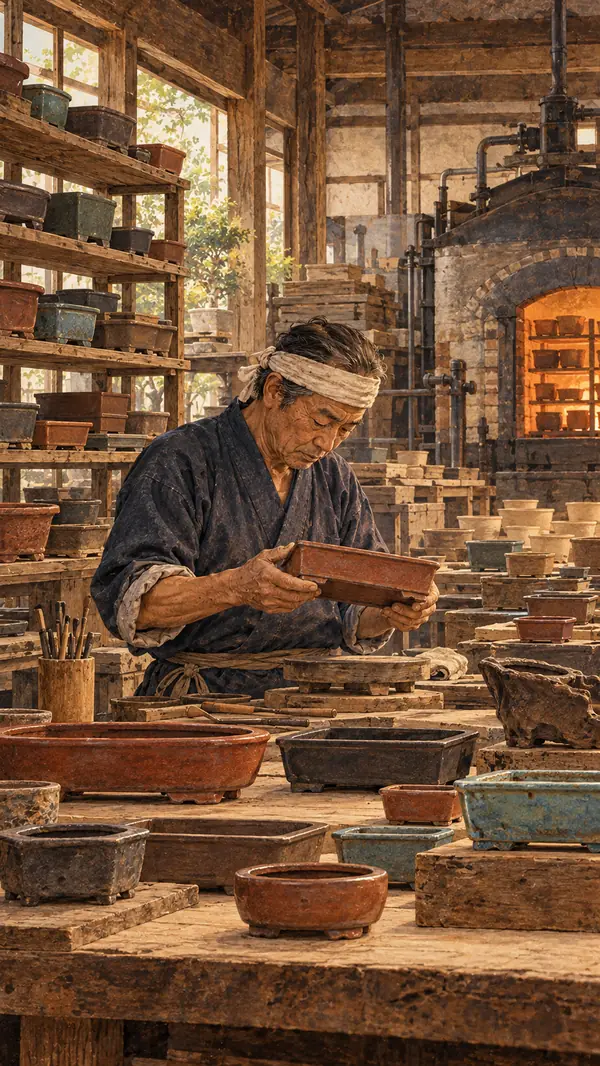
These are the Tokoname makers and kilns with a page on this site so far. Each page sets out the dates, marks and forms that are documented, and what is still open. Tokoname has many more makers than appear here.
- Bigei 美芸
Own kiln from 1975; known for small pots in shaded shudei.
- Eimei 英明
From about 1990, one idea: the same glaze firing two colours on one pot.
- Gyōzan Nakano 中野行山
Unglazed clay from very small to over 70 cm; his marks separate moulded from handmade.
- Hattori 服部
Glazed small pots made with moulds, from 1977.
- Ikkō 一弘
Glazed small pots in a gas kiln from 1978; three written forms of one name.
- Jukō 樹晃
Koyo Toen; the family green glaze on hand-built and slab-built pots.
- Juōdō Shōsen 十王堂松泉
The first generation of Yamaaki, working on his own from 1920.
- Kōyō 鴻陽
Founded Koyo Toen in 1970; known for his understanding of glaze.
- Reihō 黎鳳
Glazed pots after the colours of the old Chinese imports.
- Senshū 仙舟
Carries on Shūzan’s clay, forming and firing; one-off handwork.
- Shibakatsu 柴勝
A small-pot kiln with more than five hundred variations of colour and form.
- Shūhō 秀峰 — Yoshimura Toen
Founded as Kataoka Toen in 1923; glazed ware.
- Yamaaki 山秋
Two lines under one name — ware made in numbers, and handmade pots.
- Yamafusa 山房
A kiln, not a person; its marks divide the work by grade and by era.
- Yōzan 耀山
A kiln name that outlasted the hand behind it.
- Zengo 銭号 — Izumiya kiln
Recorded in 2006 among the longest-established bonsai-pot kilns in Tokoname.
The Kilns & places page groups the Tokoname kilns and workshops, and how some kiln names relate to individual makers.
07 · 落款と見方
Reading the marks
A Tokoname mark tells you a name. What that name stands for differs from kiln to kiln, so read each mark against what is documented for it.
Kiln or person
Whose name is it?
Yamafusa is a kiln, not a person. On the pots discussed here, the Yōzan name identifies the kiln rather than one hand.
Line of work
Which line is it?
At Yamaaki, 山秋造 goes on pots made in some number and the 松泉 marks on the handmade line. Gyōzan’s marks separate moulded from handmade work.
Copied marks
Not proof of China
Zengo’s 銭子窯製 began as the mark of a Chinese pot and was copied. On a Tokoname pot it is a Tokoname kiln’s mark.
Same sound
Not the same maker
鴻陽 of Tokoname is Kōyō; 光峰 is Kōhō, of Mino. Similar romanisations, different makers — read the characters.
Sometimes the mark is the only thing that separates two hands. Senshū took over Shūzan’s clay blending, forming and firing, so the clay and the form will not tell their pots apart; the mark will.
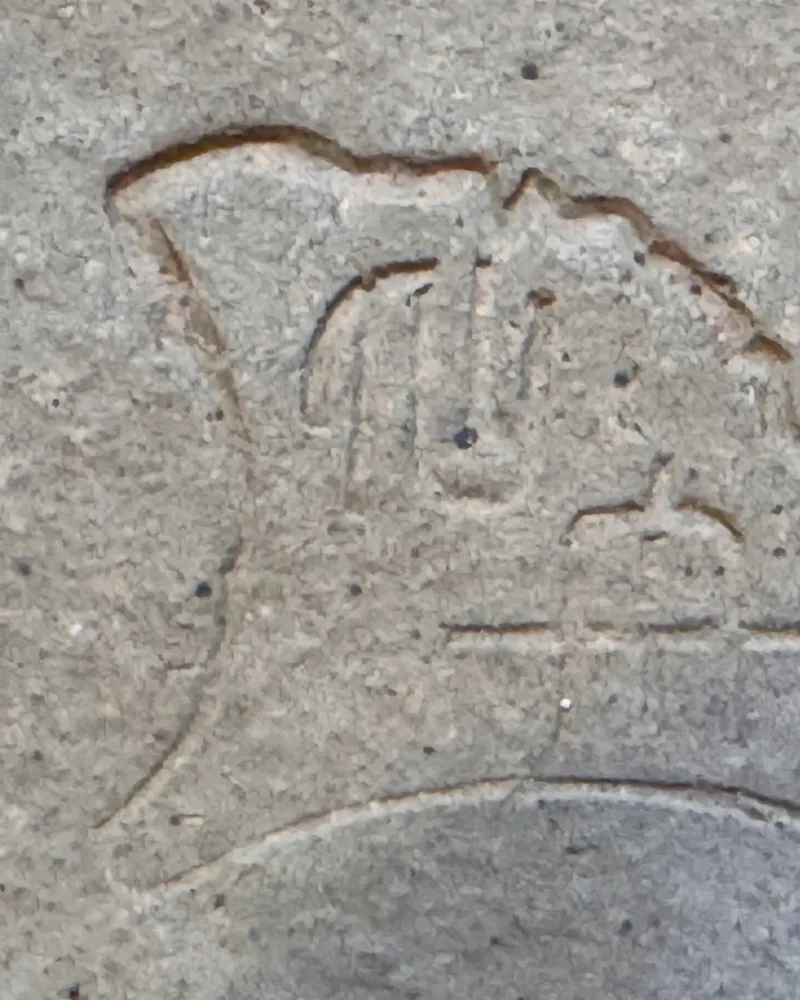
These are documented forms, not a complete list, and a mark is evidence to weigh, not proof. The marks index sets out each Tokoname mark recorded so far. If a mark puzzles you, send us a clear photograph and we will tell you what it says — we do not issue authentications.
08 · YAKUMO の常滑鉢
Tokoname pots at YAKUMO JAPAN
Our Tokoname selection changes as pots come and go. The link below opens the live Tokoname section of our eBay store, so it always shows what is available now. The pots pictured on this page are shown for reference and may no longer be available.
Browse Tokoname bonsai pots on eBay →
Listings ship from Tokyo; destination availability and terms are shown on eBay.
09 · Continue
Keep reading
The clays, forms and marks on this page each have more to say on their own pages.