Places · 偕楽園焼
Kairakuen
A lord’s garden kiln, and its bright-glazed orchid and tree pots
Kairakuen ware was made at a kiln in the garden of the Kishū Tokugawa lords, in what is now Wakayama. It is known for bright Kōchi-style glazes, lobed orchid pots and tree pots in relief.
Kairakuen ware was made at a kiln in the garden of the Kishū Tokugawa lords, in what is now Wakayama. It ran from the Bunsei era until 1852, with noted potters invited to guide its work, and is known for bright, glossy glazes in the manner of Kōchi ware. Its bonsai pots — lobed orchid pots and tree pots in relief — are the subject of this page.
00 · At a glance
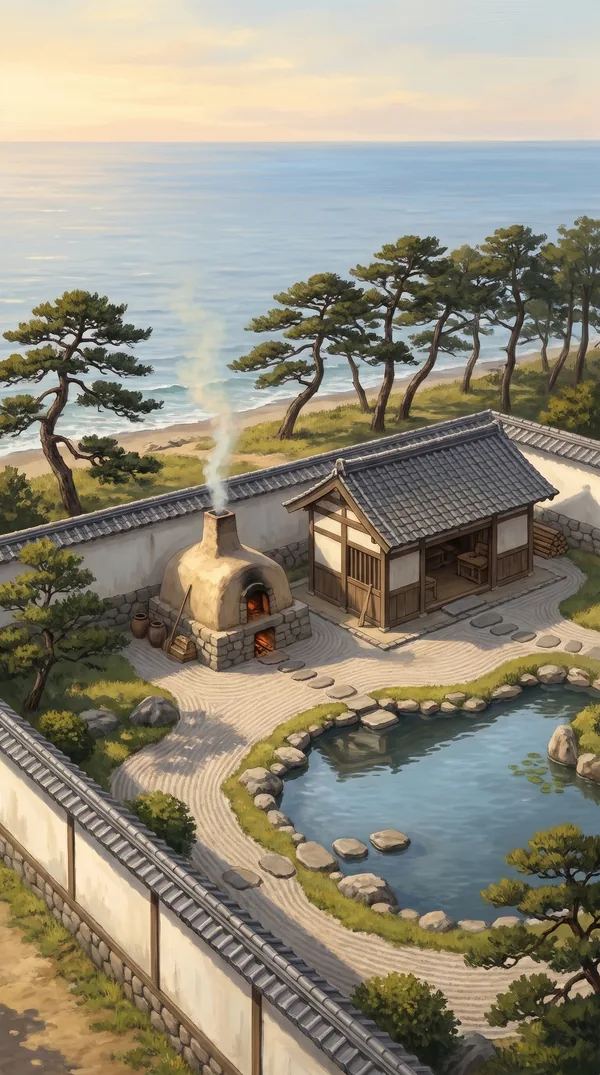
Kairakuen, in four points
Kiln
A garden kiln
A kiln kept by the Kishū Tokugawa domain in the garden of a seaside residence, in what is now Wakayama.
Dates
Bunsei era–1852
Founded by the lord Harutomi during the Bunsei era (1818–30) and kept until his death in 1852.
Style
Bright glazes
Known for copies of Kōchi ware and of gold-decorated kinrande, in strong, glossy yellow, purple, green, deep blue and white.
Bonsai pots
Orchid and tree pots
Recorded pots include lobed orchid pots and tree pots in relief, and more than one design is known in several examples.
01 · 御庭焼
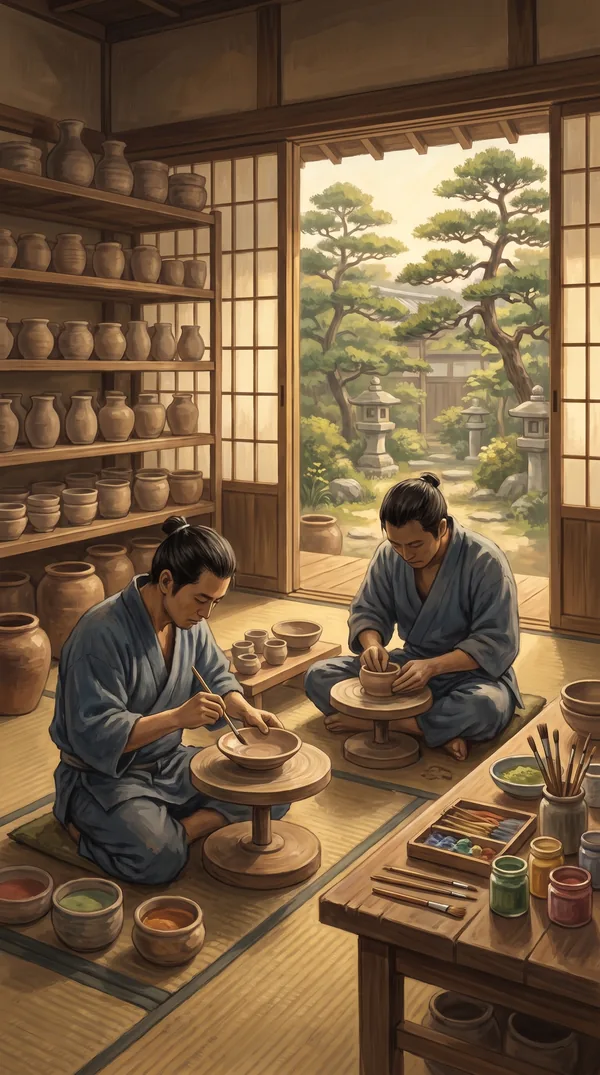
A domain’s garden kiln
Several domains ran kilns of their own to encourage pottery. These are called 御庭焼, garden kilns. The source names, among them, the Ofuke kiln of the Owari Tokugawa (see Seto), the Kōrakuen kilns of the Mito Tokugawa and of the Ikeda of Okayama — and Kairakuen, of the Kishū Tokugawa, which the source describes as the best known of them. Used on its own, it says, the term garden kiln means Kairakuen.
-
1818–30
Founded
The Kishū lord Harutomi founded the kiln in the garden, called Kairakuen, of the Nishihama residence.
-
1852
The end
It ran until Harutomi’s death in 1852.
-
Early Meiji
New kiln wares
The source also records that, for a short time in the early Meiji era, new Kairakuen-kiln wares were made in the castle town.
Other Kishū garden wares exist, such as a raku ware made for another Kishū lord. Not every piece called a Kishū garden ware is Kairakuen; and Kairakuen should not be confused with the Kōrakuen kilns of Mito and Okayama.
02 · 招かれた陶工
Noted potters, invited
Harutomi invited noted potters to guide the work, among them 永楽保全, 二代高橋道八 and 青木木米.
1827 (Bunsei 10)
A change in quality
The source records that the quality of the wares changed markedly from 1827 (Bunsei 10), when 永楽保全 arrived.
Seals
Silver and gold
Harutomi is said to have honoured him with a silver seal reading 永楽 and a gold seal reading 河浜支流.
For the Eiraku line of potters in Kyoto, see Kyoto. The seal story is given here as the source tells it, as tradition.
03 · 交趾写・金襴手写
Bright, glossy glazes
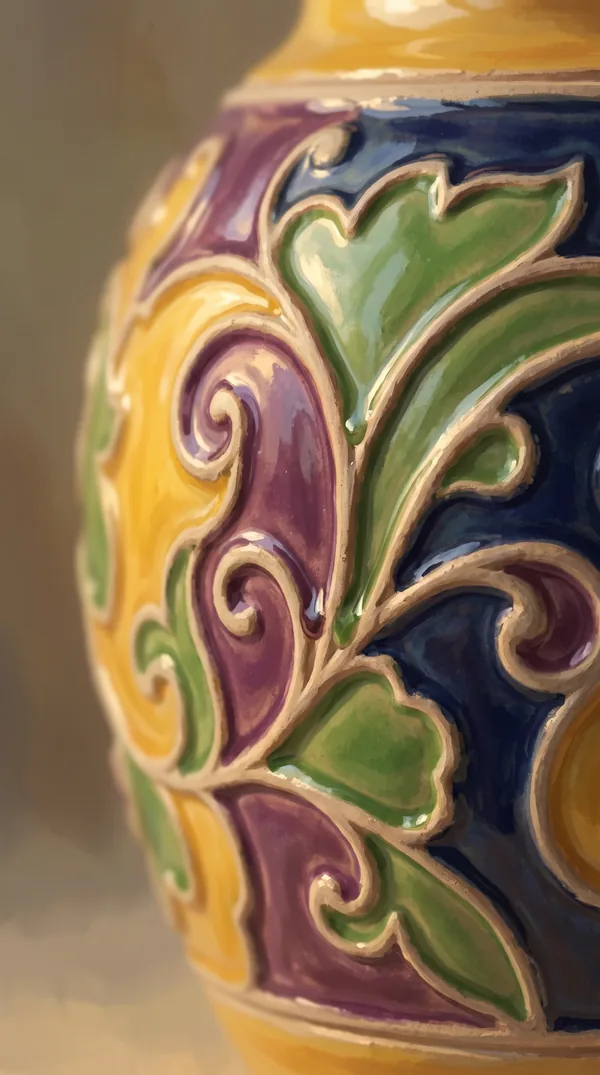
Kairakuen ware is best known for copies of Kōchi ware and of kinrande, the gold-decorated style. Its glazes are strong, glossy and clear: yellow, purple, green, deep blue and white.
Motifs
Longevity and peony
The character for long life and peony designs are named as typical of Kairakuen.
On bonsai pots
Kōchi copies
Every bonsai pot the source shows is a copy of Kōchi ware.
For Kōchi and other glazes, see Clay & glaze.
04 · 盆器
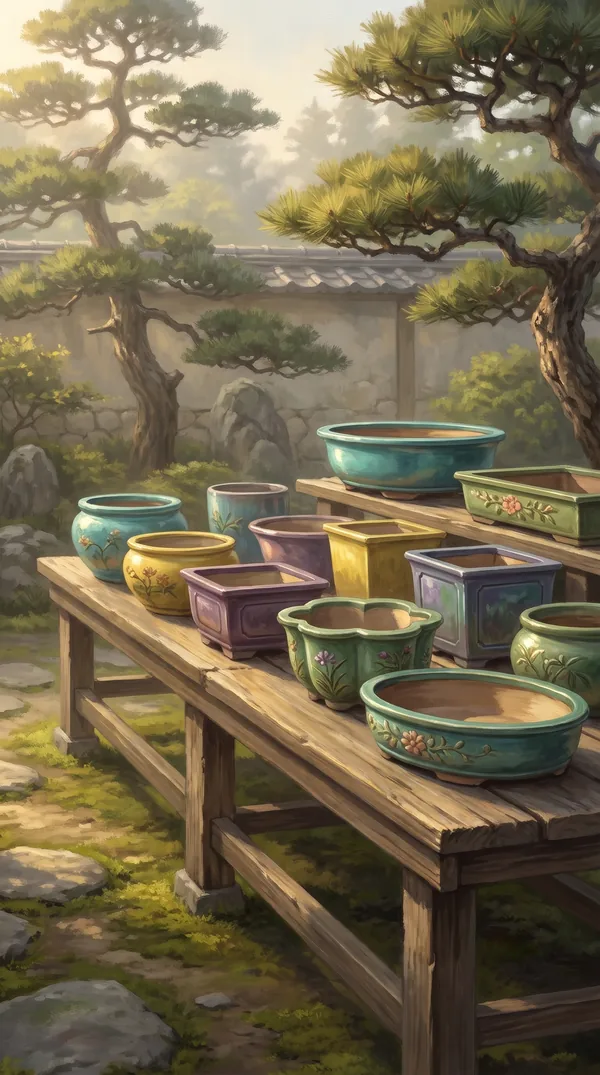
Kairakuen bonsai pots
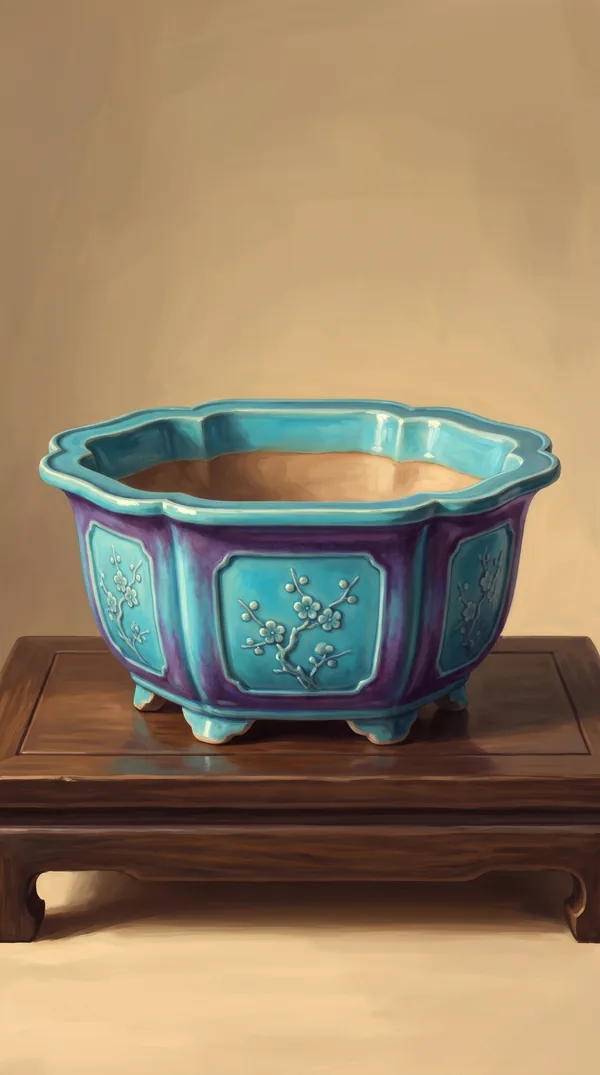
The recorded Kairakuen pots run from 7.5 cm to 32.5 cm, among them lobed orchid pots and tree pots. A few, with the source’s own comments:
Hexagonal
A tree pot
20 cm, lobed and six-sided, with fine relief work. The source suggests it served both use and display, and perhaps as a gift.
Octagonal
Windows and scholars
15 cm, lobed and eight-sided, with openwork in arched-window shapes and scholars in relief; purple against blue.
Octagonal
The twelve zodiac animals
15.5 cm, on an indigo-glazed ground, with round reserves left in the body and the twelve zodiac animals in relief — a design for celebration.
Round
The Tokugawa crest
16.5 cm, shaped like an incense burner, with the hollyhock crest of the Tokugawa as window panels on both sides. Several of the same shape and size are said to exist.
Quince-shaped
Longevity
32.5 cm, green against yellow, with the character for long life — a pot for spring-flowering adonis. Others of the same shape in different colours and sizes are known; the source suggests a good number were made.
Tiny
7.5 cm
A small quince-shaped pot with flowers in relief. The source notes that this size is rare.
Kairakuen water trays are also recorded. Two of the designs shown here are recorded in multiple examples; the source does not say this for every design. No single example dates or describes Kairakuen ware as a whole.
05 · 落款と見方
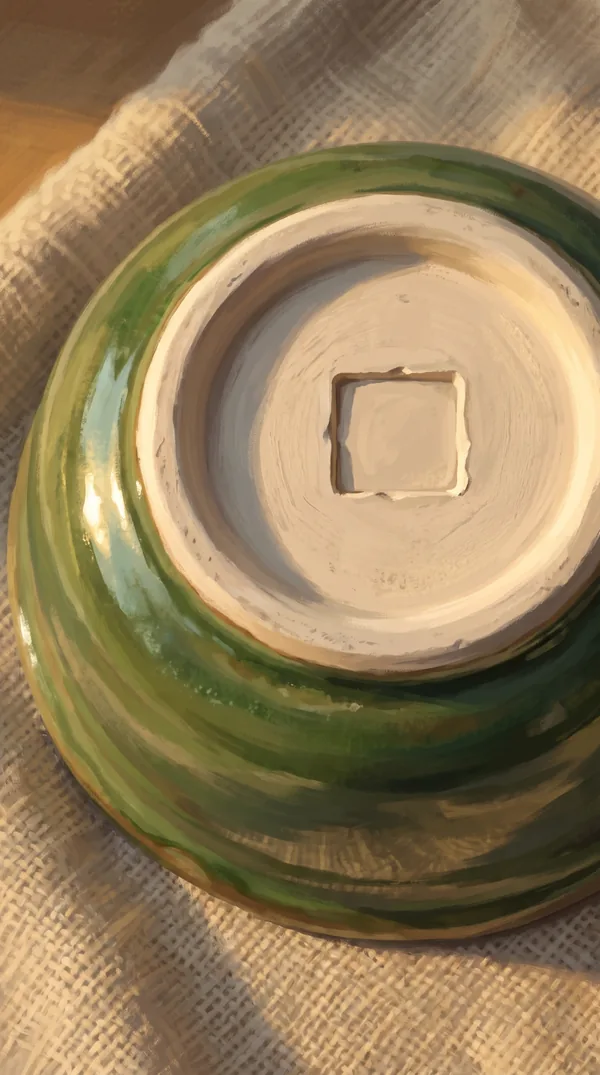
Reading a Kairakuen mark
The source shows two Kairakuen marks, both captioned 偕楽園製, “made at Kairakuen”.
For the marks recorded so far on this site, see the marks index. If a mark puzzles you, send us a clear photograph and we will tell you what it says.
06 · YAKUMO と偕楽園焼
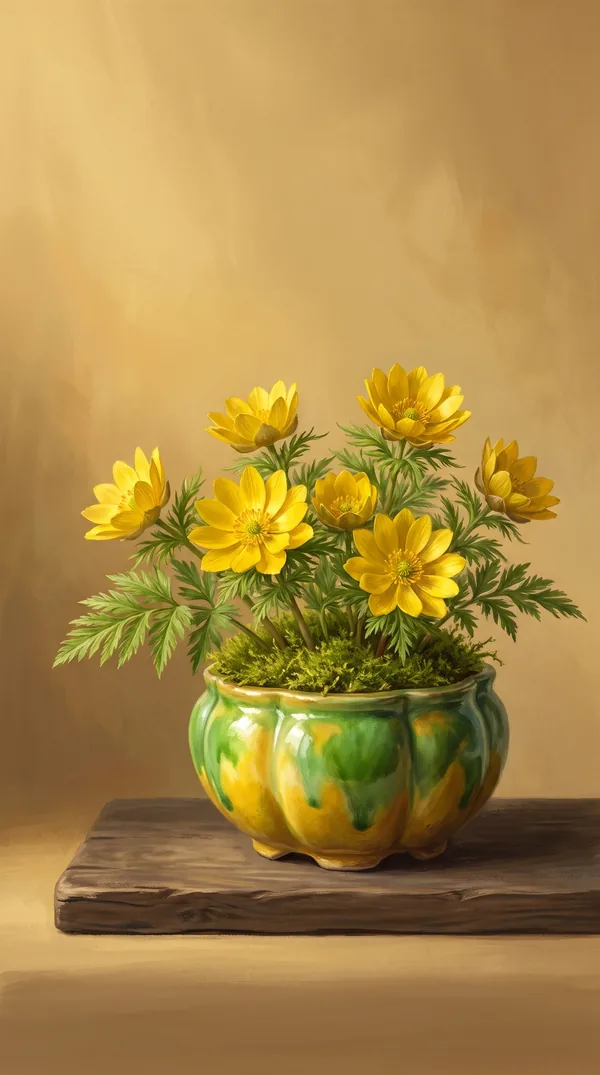
Kairakuen at YAKUMO JAPAN
Current availability changes. Our pots are grouped on eBay by kiln and origin; the link below opens that section, so it always shows what is available now. The pictures on this page are illustrations, not pots for sale.
Browse bonsai pots by kiln and origin on eBay →
Listings ship from Tokyo; destination availability and terms are shown on eBay.
07 · Continue
Keep reading
The kilns, glazes and marks on this page each have more to say on their own pages.